
How to Inherit Property in a Foreign Country: A Practical Guide for U.S. Heirs
How to Inherit Property in a Foreign Country
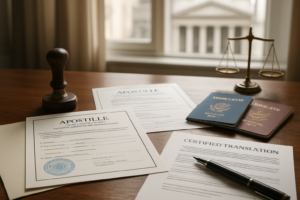
For many U.S. families, international inheritance becomes a reality without much warning. A parent may have retired abroad, a grandparent may have owned ancestral land overseas, or a relative may have maintained bank accounts and real estate in another country. When that person passes away, heirs often need to learn quickly how to inherit property in a foreign country while complying with both U.S. and foreign legal requirements.
At a basic level, inheriting foreign property means proving your legal right to receive assets located outside the United States. Those assets may include a house, apartment, land, commercial property, shares in a foreign company, or rights connected to an estate abroad. Because the property is governed by the laws of the country where it is located, the process usually involves foreign probate rules, local land registries, tax authorities, and document authentication requirements.
For U.S. heirs, one of the biggest challenges is document acceptance. Foreign courts, notaries, registries, and government offices often require official U.S. documents to be notarized, apostilled, and translated before they will recognize them. That is why understanding the full process of how to inherit property in a foreign country is essential from the beginning.
What It Means to Inherit Property Abroad
When a person dies owning real estate in another country, title to that property does not automatically transfer simply because a will exists or family members agree on who should receive it. In most jurisdictions, heirs must complete a formal legal process to establish ownership. Depending on the country, this may involve probate, succession proceedings, inheritance declarations, court orders, or notarized acceptance of inheritance.
The rules can vary significantly. Some countries follow a civil law system with forced heirship rules, meaning certain relatives are legally entitled to a fixed share regardless of the will. Others may recognize a foreign will more readily. In some places, the law of the deceased’s nationality applies to succession issues; in others, the law of the property’s location controls. These distinctions matter because they affect who inherits, what documents are needed, and how long the process takes.
If you are researching how to inherit property in a foreign country, it is important to understand that the legal answer depends on several factors:
- Where the property is located
- Whether the deceased left a valid will
- Whether the will was executed in the United States or abroad
- The deceased’s citizenship, domicile, or habitual residence
- The relationship of the heirs to the deceased
- Whether local inheritance taxes apply
When and Why This Process Is Needed
You may need to begin a foreign inheritance process when:
- A relative dies owning real estate outside the United States
- A foreign bank, court, or notary requests proof of heirship
- You need to sell inherited property abroad
- You must update title records in a foreign land registry
- You are asked to provide apostilled U.S. civil documents
- A foreign attorney needs powers of attorney or sworn statements from U.S. heirs
The process matters because without proper legal recognition, you may be unable to access, occupy, transfer, rent, manage, or sell the property. In some countries, unpaid taxes, registry issues, or incomplete succession filings can delay transfer for months or even years. A clear plan helps reduce delays and prevents costly errors.
Step-by-Step: How to Inherit Property in a Foreign Country
1. Confirm the Property and Jurisdiction
Start by identifying exactly what property exists and where it is located. Gather any deeds, tax bills, utility records, land registry extracts, mortgage statements, or correspondence showing ownership. You will also need to determine the legal jurisdiction handling the estate. In some cases, inheritance is processed through a local court; in others, through a civil law notary or administrative office.
2. Determine Whether There Is a Will
Find out whether the deceased left a will and where the original is located. There may be a U.S. will, a foreign will, or both. The foreign authority may need to review the original will, a certified copy, or a court-certified probate document. If no will exists, local intestacy laws will usually determine who inherits and in what shares.
3. Consult a Local Foreign Inheritance Attorney or Notary
Because succession law varies by country, local legal guidance is often necessary. A foreign inheritance attorney or notary can explain whether the estate requires probate, what taxes apply, and what documents must be submitted. For U.S. heirs, this step is especially important when the property is in a civil law country with formal notarized inheritance procedures.
4. Gather U.S. Documents
One of the most important parts of how to inherit property in a foreign country is assembling the correct supporting documents. Foreign authorities often require original or certified U.S. records proving identity, family relationship, and authority to act. Common examples include death certificates, birth certificates, marriage certificates, passports, probate orders, and affidavits.
5. Notarize Required Statements or Powers of Attorney
If you cannot travel abroad, you may need to sign a power of attorney authorizing a local lawyer, notary, or family member to represent you. You may also need to sign affidavits, sworn declarations, acceptance of inheritance forms, tax forms, or copies of identification. These documents frequently must be notarized in the United States before they can be used overseas.
6. Obtain an Apostille or Authentication
Foreign officials generally will not accept many U.S. documents unless they are properly authenticated. If the destination country is a member of the Hague Apostille Convention, you will usually need an apostille. If it is not a member, consular or embassy legalization may be required instead. This step is critical in the process of how to inherit property in a foreign country because an unapostilled document may be rejected outright.
An apostille certifies the authenticity of the signature, seal, or official capacity of the person who signed the document. It does not validate the content, but it allows the document to be recognized in another Hague Convention country.
7. Translate the Documents
Most foreign courts, land registries, and notarial offices require documents in the local language. That means U.S. documents often need certified translation, and in some countries, they may need to be translated by a sworn or court-approved translator. Translation requirements vary, so always confirm the exact standard before ordering service.
8. Submit the Inheritance File Abroad
Once the documents are notarized, apostilled, and translated as needed, they are submitted to the appropriate foreign authority. This may include a probate court, civil law notary, tax office, cadastral authority, or land registry. Additional steps may include obtaining a tax identification number, paying inheritance tax, recording the change of ownership, or registering the heirs’ interests.
9. Transfer or Sell the Property
After inheritance is recognized, the property can usually be transferred into the heir’s name or names. If the heirs choose to sell, a foreign attorney or notary can assist with listing, sale documents, tax clearances, and distribution of proceeds. If there are multiple heirs, they may need to agree on division, co-ownership, or sale terms.
Documents Commonly Required
Although requirements differ by country, the following documents are frequently requested when determining how to inherit property in a foreign country:
- Official death certificate
- Last will and testament
- Probate order or letters testamentary
- Court order appointing executor or administrator
- Birth certificates of heirs
- Marriage certificates or divorce decrees, if relevant
- Valid passports or government-issued identification
- Proof of address for heirs
- Property deed or registry extract
- Tax identification numbers
- Affidavit of heirship or sworn declaration
- Power of attorney
- Bank information for estate distributions
- Certified translations of all required records
- Apostilles or legalization certificates
In many cases, foreign authorities require recent certified copies rather than old photocopies. They may also insist that names match exactly across all documents. If there are discrepancies due to marriage, spelling variations, or transliteration differences, supplemental affidavits may be necessary.
How Apostille, Notarization, and Certified Translation Apply
Notarization
Notarization is often required for powers of attorney, affidavits, sworn statements, signature verifications, and certified copies. A notary public verifies identity and witnesses the signature where required. For foreign inheritance matters, proper notarization helps establish that the document was validly executed in the United States.
Apostille
If the foreign country accepts apostilles, this is usually the next step after notarization or after obtaining a certified vital record. Apostilles are commonly needed for:
- Death certificates
- Birth and marriage certificates
- Powers of attorney
- Affidavits and sworn declarations
- Court-certified probate records
- Notarized copies of passports or IDs, where permitted
Because each document type may have different issuance and certification rules, it is wise to verify the proper apostille path before submission.
Certified Translation
Certified translation is often essential when submitting U.S. documents abroad. A certified translator or translation provider attests that the translation is complete and accurate. Some countries require sworn translations or translations completed in the destination country. For that reason, translation should be coordinated with the receiving authority’s exact standards.
For families navigating how to inherit property in a foreign country, professional handling of apostille, notarization, and certified translation can save significant time and reduce the risk of rejection.
Typical Costs and Timelines
Costs vary widely depending on the country, the complexity of the estate, and whether there are disputes among heirs. Typical expenses may include:
- Certified copies of vital records
- Notary fees
- Apostille processing fees
- Certified translation fees
- Foreign attorney or notary fees
- Court filing fees
- Land registry charges
- Inheritance or transfer taxes
- Courier and international shipping costs
As a general estimate, document preparation alone may range from a few hundred to over a thousand dollars, depending on volume and urgency. Legal fees abroad may range from modest flat fees for simple estates to several thousand dollars for complex or contested matters. Taxes can significantly increase total cost in some jurisdictions.
Timelines also vary. A straightforward inheritance with a clear will and cooperative heirs may take a few months. More complex cases involving multiple heirs, tax issues, title defects, or court proceedings can take six months to a year or longer. Delays often occur when documents are incomplete, improperly notarized, missing apostilles, or translated incorrectly.
Common Mistakes to Avoid
If you are trying to understand how to inherit property in a foreign country, avoiding these common mistakes can make the process much smoother:
- Assuming a U.S. will automatically controls foreign real estate
- Failing to verify local inheritance law before acting
- Submitting ordinary photocopies instead of certified copies
- Using notarization when an apostille is also required
- Ordering translations before confirming local formatting rules
- Misspelling names or overlooking inconsistencies across documents
- Waiting too long to address foreign tax or filing deadlines
- Signing powers of attorney incorrectly
- Using a translation provider unfamiliar with legal documents
- Trying to handle a multi-country estate without professional support
Another frequent issue is assuming all countries follow the same procedure. In reality, one country may require a court order, while another may require a notarial inheritance deed. Some countries require all heirs to appear or be represented; others permit remote processing with a properly apostilled power of attorney.
Practical Tips for U.S. Heirs
- Request a document checklist from the foreign attorney or notary before ordering records.
- Confirm whether the destination country accepts apostilles or requires legalization.
- Use current certified copies of birth, marriage, and death records.
- Check that names, dates, and places match across all documents.
- Ask whether translations must be certified, sworn, or completed locally.
- Keep scanned copies of everything you send abroad.
- Use trackable shipping for original documents.
- Plan for extra time if multiple heirs live in different states or countries.
Final Thoughts
Learning how to inherit property in a foreign country can feel overwhelming, especially while dealing with the loss of a loved one. Yet the process becomes more manageable when you break it into steps: confirm the property and jurisdiction, identify the heirs, gather official records, complete notarization and apostille requirements, obtain certified translations, and submit the documents through the proper foreign channel.
For U.S. heirs, document compliance is often the key to success. Foreign authorities typically expect properly certified, authenticated, and translated paperwork before they will recognize inheritance rights. Working with experienced professionals for apostille, notary, and certified translation services can help prevent delays and keep the estate process moving.
If you need help preparing U.S. documents for an overseas inheritance matter, professional guidance can make a major difference. The right support helps ensure your paperwork is accepted abroad so you can move forward with confidence.
