
What Is Apostille Notary? A Complete U.S. Guide to Apostilles, Notarization, and Certified Translation
What Is Apostille Notary?

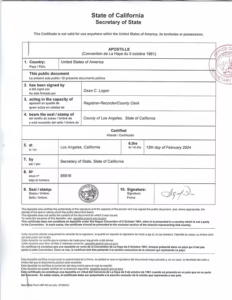
If you are asking what is apostille notary, you are not alone. Many people use this phrase when they need to prepare U.S. documents for use in another country. In practice, an apostille and a notarization are related but different steps. A notary verifies the identity of the signer and witnesses a signature or certifies certain acts under state law. An apostille is a government-issued authentication certificate that confirms the validity of the signature, seal, or official capacity on a public document so it can be recognized in another country that is a member of the Hague Apostille Convention.
In simple terms, when people search for what is apostille notary, they usually want to know how to make a document legally acceptable overseas. Depending on the document, you may need notarization first, then an apostille. In other cases, a notarization is not required because the document is already an official record issued by a government agency.
Understanding the difference matters because submitting the wrong version of a document, skipping notarization when required, or requesting an apostille from the wrong authority can cause delays, rejections, and extra costs.
Apostille vs. Notary: What Is the Difference?
To fully understand what is apostille notary, it helps to separate the two concepts:
- Notarization: Performed by a notary public. The notary verifies identity, confirms willingness to sign, and completes a notarial certificate.
- Apostille: Issued by a designated government authority, usually the Secretary of State for state documents or the U.S. Department of State for certain federal documents. The apostille certifies the authenticity of the signature and seal on the document.
A notarization does not automatically make a document valid internationally. Likewise, an apostille is not a substitute for notarization when notarization is required. They serve different legal functions in the document authentication process.
When Do You Need an Apostille?
You may need an apostille when a U.S. document will be presented in a foreign country that is part of the Hague Apostille Convention. Common situations include:
- International marriage applications
- Dual citizenship or ancestry claims
- Studying abroad
- Working overseas
- International adoptions
- Foreign real estate transactions
- Opening a business abroad
- Granting power of attorney for use in another country
- Submitting birth, marriage, divorce, or death records overseas
If the destination country is not a member of the Hague Apostille Convention, you may need a different process called authentication and legalization instead of an apostille.
Why Apostilles Matter for International Use
The reason people search what is apostille notary is usually because a foreign authority, school, court, employer, or government office has requested document authentication. An apostille helps the receiving country trust that the U.S. document is genuine.
Without proper authentication, your document may be rejected abroad even if it is valid in the United States. That can affect immigration deadlines, school enrollment, business filings, court proceedings, and family matters. A properly prepared apostille package reduces the risk of rejection and gives foreign institutions confidence that the document meets international standards.
What Types of Documents Can Be Apostilled?
The types of documents that may require apostille services generally fall into two categories: public records and notarized private documents.
Common public documents
- Birth certificates
- Marriage certificates
- Death certificates
- Divorce decrees
- Court orders
- School transcripts and diplomas
- Background checks
- Certificates of naturalization copies, where applicable through proper channels
- Corporate formation documents
Common notarized documents
- Powers of attorney
- Affidavits
- Consent letters for child travel
- Single status affidavits
- Copies of certain documents, if allowed by state law
- Business agreements intended for foreign use
Whether a document needs notarization before apostille depends on the document type and the rules of the issuing state or agency.
Step-by-Step: How the Apostille Process Works in the U.S.
If you want a practical answer to what is apostille notary, the process below is the most important part.
- Identify the destination country. Confirm whether the country is a member of the Hague Apostille Convention. If it is not, apostille may not be the correct process.
- Determine the document type. Is it a vital record, court record, school document, corporate document, or private document that must be notarized?
- Get the correct original or certified copy. Many documents must be recent certified copies issued by the proper authority. Photocopies are often rejected.
- Notarize the document if required. Private documents such as affidavits or powers of attorney often need notarization before they can be apostilled.
- Verify county or state-level requirements. Some states require additional certification before the Secretary of State will issue the apostille.
- Submit to the proper authority. State-issued documents usually go to the Secretary of State in the state where the document was notarized or issued. Certain federal documents go through federal channels.
- Pay the filing fee and choose processing speed. Standard and expedited options may be available depending on the state and service provider.
- Receive the apostille. The apostille is attached to the document or issued as a separate page linked to it.
- Translate the document if required. Some foreign authorities require a certified translation of the original document and sometimes of the apostille itself.
What Documents and Information Are Typically Required?
The exact requirements vary by state and document type, but most apostille requests require the following:
- The original document or a properly certified copy
- A completed apostille request form, if required
- The destination country name
- Payment for state or agency fees
- A return envelope or shipping label for mail orders
- Government-issued identification for notarization appointments
- Any supporting instructions from the receiving foreign authority
For notarized documents, the signer usually must appear before the notary with valid ID. The notary certificate must be complete, accurate, and compliant with state law. Missing notarial wording, incomplete dates, or signature mismatches can lead to rejection.
How Notarization Applies to Apostille Requests
A major point of confusion behind the phrase what is apostille notary is whether every document needs a notary. The answer is no.
Documents that often do not need notarization first:
- Certified birth certificates
- Certified marriage certificates
- Court-issued documents
- State-issued corporate records
Documents that often do need notarization first:
- Affidavits
- Powers of attorney
- Permission letters
- Personal declarations
- Private business documents
The key is that the apostille authenticates the signature already on the document. If the document is a private document, the signature being authenticated is often the notary’s signature. If the document is a certified public record, the apostille may authenticate the signature of the registrar, clerk, or other issuing official instead.
How Certified Translation Fits Into the Process
Certified translation is often essential when documents are going to a non-English-speaking country. While an apostille confirms authenticity, it does not translate the content. Foreign authorities may require a certified translation so they can understand and legally review the document.
You may need certified translation for:
- Birth and marriage certificates
- Divorce decrees
- Academic records
- Powers of attorney
- Corporate documents
- Supporting immigration or civil status records
A certified translation typically includes a signed statement from the translator or translation provider confirming that the translation is accurate and complete. Requirements vary by country, so it is important to verify whether the receiving authority wants the translation notarized, certified, or completed by a court-approved translator.
For many clients, using a service that handles apostille, notary, and certified translation together can simplify the process and reduce errors.
Typical Costs and Timelines
People searching what is apostille notary also want to know what to expect in terms of price and turnaround time. Costs vary by state, document type, shipping method, and whether rush service is needed.
Typical costs may include:
- State apostille fee per document
- Notary fee, if notarization is required
- Certified copy fee for vital records or court documents
- Certified translation fee, often based on word count or page count
- Mailing, courier, or overnight shipping charges
- Professional service or processing fees for document review and submission
As a general rule, basic apostille filing fees are often modest, but total project cost can increase when documents must be reordered, notarized, translated, expedited, or shipped internationally.
Typical timelines may include:
- Notarization: Often same day
- Obtaining certified copies: Same day to several weeks, depending on the agency
- State apostille processing: A few business days to several weeks
- Expedited service: Potentially faster when available
- Certified translation: Often 1 to 3 business days for standard documents, longer for large files
If you have a deadline for a visa, wedding, school enrollment, or foreign court matter, it is wise to start early and confirm all requirements in advance.
Common Mistakes to Avoid
One of the best ways to understand what is apostille notary is to know what can go wrong. Here are some of the most common mistakes:
- Using the wrong document version. Many authorities require an original certified copy, not a scan or plain photocopy.
- Getting notarization when it is not appropriate. Some public records should be obtained as certified records rather than notarized copies.
- Skipping notarization when it is required. Private documents often cannot be apostilled without a proper notarization.
- Submitting to the wrong state. Apostilles are usually issued by the state where the document was notarized or issued.
- Ignoring destination-country requirements. Translation, formatting, and validity-period rules vary.
- Using incomplete notarial certificates. Missing seals, signatures, venue information, or dates can cause rejection.
- Waiting too long. Some records must be recently issued, and processing times can change.
- Assuming apostille and legalization are the same. They are not. Non-Hague countries usually require a different process.
How to Know If You Need Professional Help
If your case involves multiple documents, urgent deadlines, or foreign-language requirements, professional guidance can save time and reduce risk. This is especially true for clients dealing with international marriage, dual citizenship, overseas property transactions, or business filings abroad.
A professional apostille service can help review your documents, identify whether notarization is needed, confirm the correct issuing authority, coordinate certified translation, and track deadlines from start to finish.
Final Answer: What Is Apostille Notary?
The simplest answer to what is apostille notary is this: it refers to the process of preparing a document for international use by combining notarization when needed and apostille certification from the proper government authority. Not every document needs both steps, but many private documents do. Public records may only need certified copies and apostille issuance.
For U.S. documents going abroad, accuracy matters. The right document, the right notarization, the right apostille authority, and the right certified translation can make the difference between smooth acceptance and costly delays.
If you need help with apostille processing, notarization, or certified translation, working with an experienced professional service can help ensure your documents are prepared correctly the first time.
