
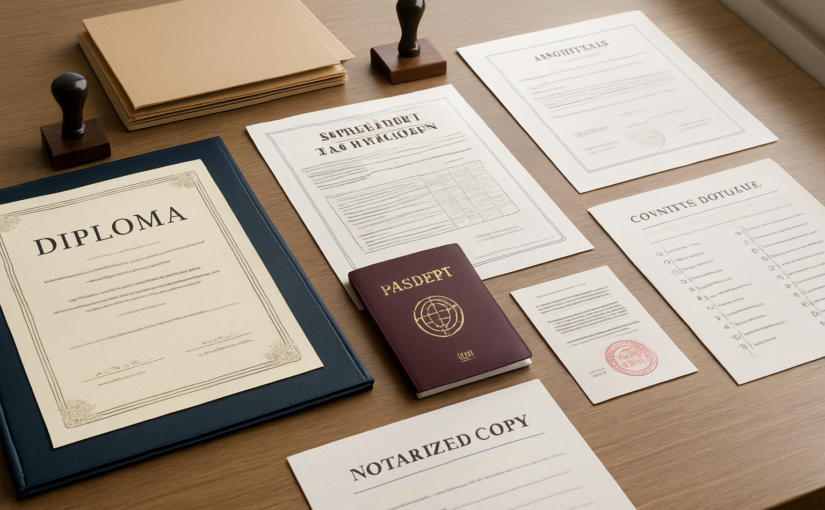
Apostille Diploma for Study Abroad: How to Prepare Diplomas, Transcripts, and School Records Without Rejection
Apostille Diploma for Study Abroad: Why It Matters
If you are applying to a foreign university, your academic documents must often do more than simply look official. Many institutions require an apostille diploma, apostilled transcripts, or notarized school records to verify that your documents are authentic and legally recognized abroad. Without proper preparation, students may face application delays, missed enrollment deadlines, or outright rejection of their paperwork.
An apostille is a form of international certification used between countries that are members of the Hague Apostille Convention. It confirms the authenticity of the signature, seal, or stamp on a public document. For students, this usually applies to diplomas, transcripts, enrollment certificates, graduation certificates, and sometimes letters issued by a school registrar. If the destination country or university requests an apostille diploma, submitting an ordinary photocopy will usually not be enough.
Which Student Documents May Need an Apostille?
The exact list depends on the university and country, but the most common academic records include:
- High school diploma or university diploma
- Official transcripts
- Degree certificates or graduation certificates
- Enrollment verification letters
- Notarized copies of school records
- Registrar-issued academic statements
Some universities ask for original documents, while others accept notarized copies that can then receive an apostille. This distinction is critical. Before starting the apostille diploma process, always check the admissions office instructions, international student guidelines, and embassy or consulate requirements for the destination country.
Step-by-Step: How to Prepare an Apostille Diploma Correctly
1. Confirm the University’s Exact Requirements
Do not assume every school follows the same rule. One university may require an apostille diploma and apostilled transcript, while another may request legalized translations as well. Ask these questions first:
- Do they need the original diploma or a notarized copy?
- Must transcripts be sealed by the school?
- Is a certified translation required?
- Does the apostille need to be issued in the country where the document originated?
Getting clear answers before submission is the best way to prevent rejection.
2. Obtain Fresh Official Documents
Order official transcripts and certified school records directly from your school or university registrar. If you need a diploma copy, request a certified copy if available. Universities abroad often reject scans, unofficial printouts, or documents that appear altered. Freshly issued records are easier to notarize or authenticate because signatures and seals are current and readable.
3. Determine Whether Notarization Is Required First
In many cases, a diploma is not apostilled directly unless it is already considered a public document under local rules. Instead, students may need to create a notarized copy, then submit that notarized record for apostille. The same can apply to transcripts or academic certificates. Because procedures differ by jurisdiction, verify whether your document needs:
- Direct apostille on the original document
- Notarization before apostille
- School official certification before notarization
This is one of the most common points of confusion in the apostille diploma process.
4. Check Names, Dates, and Document Consistency
Rejections often happen because names do not match across documents. Your passport, application form, diploma, and transcripts should use the same legal name format whenever possible. Review graduation dates, student ID numbers, degree titles, and school names carefully. Even small inconsistencies can trigger questions from admissions officers.
5. Prepare Certified Translations if Needed
If your documents are not in the official language required by the university, you may need a certified translation. In some countries, both the original and the translation must be notarized or apostilled. Never translate the document yourself unless the university explicitly allows it. Use a professional translator familiar with academic records and international submissions.
6. Submit to the Competent Apostille Authority
The apostille must be issued by the authority designated in the country where the document was created. Depending on the jurisdiction, this may be a secretary of state, foreign ministry, or another government office. Submit exactly what is required: original document, notarized copy, application form, fee, and return envelope if applicable. A properly issued apostille diploma should show the official apostille certificate attached to the document.
Common Reasons an Apostille Diploma Gets Rejected
- The wrong document was apostilled
- A notarized copy was required, but the original was submitted instead
- The notary signature was incomplete or invalid
- The transcript was unofficial or unsealed
- The translation was not certified
- The document had mismatched names or dates
- The apostille was issued in the wrong country
To avoid these problems, students should create a document checklist and review every requirement before mailing anything.
Best Practices for Students Applying Abroad
- Start early, especially during graduation and admissions seasons.
- Request multiple certified copies when possible.
- Keep digital scans of every document and apostille.
- Use trackable shipping for international submissions.
- Confirm whether the university wants paper originals or digital uploads first.
- Ask whether the apostille diploma must be recent, as some institutions prefer newly issued records.
For students managing tight deadlines, professional document preparation support can also help reduce risk. A reliable service can guide you on notarization order, apostille eligibility, and translation coordination, which is especially useful when preparing several records at once.
Final Thoughts on Preparing an Apostille Diploma
An apostille diploma is more than a stamp. It is a critical part of proving your academic history to foreign universities. When students prepare diplomas, transcripts, and notarized school records carefully, they improve the chance of smooth admissions processing and avoid costly delays.
The key is accuracy, timing, and compliance with both university and government rules. If you confirm requirements early, use official records, and follow the correct notarization and apostille steps, your study abroad documents can be submitted with confidence and without rejection.
—
유학을 위한 아포스티유 졸업장: 왜 중요한가요?
해외 대학에 지원할 때 학업 서류는 단순히 공식적으로 보이는 것만으로는 충분하지 않은 경우가 많습니다. 많은 교육기관은 서류의 진위와 해외에서의 법적 효력을 확인하기 위해 아포스티유 졸업장, 아포스티유가 부착된 성적증명서, 또는 공증된 학교 기록을 요구합니다. 이러한 준비가 정확하지 않으면 지원 지연, 등록 마감일 초과, 또는 서류 반려로 이어질 수 있습니다.
아포스티유는 헤이그 아포스티유 협약 가입국 간에 사용되는 국제 인증 방식입니다. 이는 공문서에 포함된 서명, 직인, 또는 인장의 진위를 확인해 줍니다. 학생의 경우 일반적으로 고등학교 졸업장, 대학교 학위증, 성적증명서, 재학증명서, 졸업증명서, 그리고 때로는 학교 행정실이나 학적 담당자가 발급한 확인서가 해당됩니다. 지원 국가나 대학이 아포스티유 졸업장을 요구한다면, 일반 복사본만 제출해서는 보통 인정되지 않습니다.
어떤 학생 서류에 아포스티유가 필요할 수 있나요?
정확한 서류 목록은 대학과 국가에 따라 다르지만, 가장 일반적인 학업 서류는 다음과 같습니다.
- 고등학교 졸업장 또는 대학교 학위증
- 공식 성적증명서
- 학위증명서 또는 졸업증명서
- 재학 확인서
- 공증된 학교 기록 사본
- 학적 담당자가 발급한 학업 관련 확인서
어떤 대학은 원본 서류를 요구하고, 다른 대학은 아포스티유를 받을 수 있는 공증 사본을 허용합니다. 이 차이는 매우 중요합니다. 아포스티유 졸업장 절차를 시작하기 전에 반드시 입학처 안내, 국제학생 지침, 그리고 목적지 국가의 대사관 또는 영사관 요구사항을 확인해야 합니다.
아포스티유 졸업장을 올바르게 준비하는 단계별 방법
1. 대학의 정확한 요구사항을 확인합니다
모든 학교가 같은 기준을 적용한다고 가정하면 안 됩니다. 어떤 대학은 아포스티유 졸업장과 아포스티유 성적증명서를 요구하고, 다른 대학은 번역 공증까지 요구할 수 있습니다. 먼저 다음 사항을 확인해야 합니다.
- 원본 졸업장이 필요한가요, 아니면 공증 사본이 가능한가요?
- 성적증명서는 학교 봉인이 되어 있어야 하나요?
- 공인 번역본이 필요한가요?
- 아포스티유는 해당 문서가 발급된 국가에서 받아야 하나요?
제출 전에 명확한 답변을 확보하는 것이 서류 반려를 막는 가장 좋은 방법입니다.
2. 최신 공식 서류를 발급받습니다
성적증명서와 학교 기록은 학교 또는 대학의 학적 담당 부서에서 직접 공식 발급받아야 합니다. 졸업장 사본이 필요하다면 가능할 경우 인증 사본을 요청하는 것이 좋습니다. 해외 대학은 스캔본, 비공식 출력물, 또는 수정된 것으로 보이는 서류를 거절하는 경우가 많습니다. 최근 발급된 서류는 서명과 직인이 선명하고 최신 상태이므로 공증이나 인증 절차가 더 수월합니다.
3. 먼저 공증이 필요한지 확인합니다
많은 경우 졸업장 원본이 현지 규정상 바로 공문서로 인정되지 않으면 직접 아포스티유를 받을 수 없습니다. 이 경우 공증 사본을 만든 뒤, 그 공증 문서에 아포스티유를 받아야 할 수 있습니다. 성적증명서나 각종 학업 증명서도 같은 방식이 적용될 수 있습니다. 절차는 관할 지역마다 다르므로 다음 중 어떤 방식이 필요한지 확인해야 합니다.
- 원본 문서에 직접 아포스티유
- 공증 후 아포스티유
- 학교 담당자 확인 후 공증
이 부분은 아포스티유 졸업장 절차에서 가장 자주 혼동되는 지점 중 하나입니다.
4. 이름, 날짜, 서류 간 일치 여부를 확인합니다
서류가 반려되는 흔한 이유 중 하나는 이름 표기가 서로 다르기 때문입니다. 여권, 지원서, 졸업장, 성적증명서에는 가능한 한 동일한 법적 이름 형식이 사용되어야 합니다. 졸업일, 학생번호, 학위명, 학교명도 꼼꼼히 검토해야 합니다. 작은 불일치도 입학 담당자의 추가 확인을 초래할 수 있습니다.
5. 필요한 경우 공인 번역본을 준비합니다
서류가 대학에서 요구하는 공식 언어로 작성되어 있지 않다면 공인 번역이 필요할 수 있습니다. 일부 국가에서는 원본과 번역본 모두에 대해 공증 또는 아포스티유가 요구되기도 합니다. 대학이 명시적으로 허용하지 않는 한 본인이 직접 번역해서는 안 됩니다. 학업 서류와 국제 제출 절차에 익숙한 전문 번역사를 이용하는 것이 안전합니다.
6. 관할 아포스티유 발급 기관에 제출합니다
아포스티유는 반드시 해당 문서가 발급된 국가의 지정 기관에서 발급받아야 합니다. 관할에 따라 주정부 기관, 외교부, 또는 다른 정부 기관이 담당할 수 있습니다. 원본 문서, 공증 사본, 신청서, 수수료, 필요 시 반송용 봉투 등 요구되는 서류를 정확히 제출해야 합니다. 적법하게 발급된 아포스티유 졸업장에는 공식 아포스티유 증서가 문서에 첨부되어 있어야 합니다.
아포스티유 졸업장이 반려되는 일반적인 이유
- 잘못된 문서에 아포스티유를 받은 경우
- 공증 사본이 필요한데 원본을 제출한 경우
- 공증인의 서명 요건이 불완전하거나 유효하지 않은 경우
- 성적증명서가 비공식이거나 봉인되지 않은 경우
- 번역본이 공인되지 않은 경우
- 이름이나 날짜가 서로 일치하지 않는 경우
- 잘못된 국가에서 아포스티유를 발급받은 경우
이러한 문제를 피하려면 학생은 서류 체크리스트를 만들고, 발송 전 모든 요건을 다시 검토해야 합니다.
해외 지원 학생을 위한 실무 팁
- 졸업 시즌과 입학 시즌을 고려해 가능한 한 일찍 시작합니다.
- 가능하면 여러 부의 인증 사본을 발급받습니다.
- 모든 서류와 아포스티유의 디지털 스캔본을 보관합니다.
- 국제 발송 시 추적 가능한 배송 서비스를 이용합니다.
- 대학이 종이 원본을 원하는지, 디지털 업로드를 먼저 받는지 확인합니다.
- 일부 기관은 최근 발급된 서류를 선호하므로 아포스티유 졸업장의 발급 시점 요건도 확인합니다.
마감이 촉박한 학생이라면 전문 문서 준비 지원을 활용하는 것도 도움이 됩니다. 신뢰할 수 있는 서비스는 공증 순서, 아포스티유 가능 여부, 번역 연계 절차를 안내해 줄 수 있어 여러 서류를 동시에 준비할 때 특히 유용합니다.
아포스티유 졸업장 준비에 대한 마무리
아포스티유 졸업장은 단순한 도장이 아닙니다. 이는 해외 대학에 자신의 학업 이력을 입증하는 핵심 요소입니다. 학생이 졸업장, 성적증명서, 공증된 학교 기록을 신중하게 준비하면 입학 심사가 원활하게 진행될 가능성이 높아지고 불필요한 지연도 줄일 수 있습니다.
핵심은 정확성, 시기, 그리고 대학 및 정부 규정 준수입니다. 요구사항을 미리 확인하고, 공식 서류를 사용하며, 올바른 공증 및 아포스티유 절차를 따르면 유학 서류를 자신 있게 제출하고 반려 위험도 줄일 수 있습니다.
