
Dual Citizenship in Canada: Rules, Eligibility, Application Steps, Documents, Costs, and Common Pitfalls
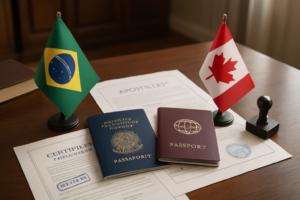
Dual Citizenship in Canada is legally recognized, which means many people can be Canadian citizens while also holding the citizenship of another country. For families, expatriates, immigrants, and children born abroad to Canadian parents, understanding the rules is essential before applying for proof of citizenship, naturalization, or related status documents.
This guide explains the core rules for Dual Citizenship in Canada, including who is eligible, how the process works step by step, what documents are required, how foreign documents must be apostilled or legalized and certified-translated for use in Canada, expected processing times, government fees, and the most common pitfalls applicants face.
Does Canada Allow Dual Citizenship?
Yes. Canada allows dual citizenship, sometimes called dual nationality. Canadian law does not generally require a person to renounce another citizenship in order to become a Canadian citizen or to keep Canadian citizenship. In practice, this means a person may be a citizen of Canada and another country at the same time.
However, Dual Citizenship in Canada also depends on the law of the other country involved. While Canada permits dual nationality, another country may restrict it, automatically revoke citizenship, or require a declaration. Before taking any step, applicants should verify the nationality rules of the other country through its embassy, consulate, or official government source.
Who Is Eligible for Dual Citizenship in Canada?
1. People Born in Canada
Most people born on Canadian soil automatically acquire Canadian citizenship at birth. If they also acquire another citizenship through a parent, they may hold Dual Citizenship in Canada without a separate Canadian dual nationality application.
2. Children Born Abroad to a Canadian Parent
A child born outside Canada may be a Canadian citizen by descent if at least one legal parent was a Canadian citizen at the time of the child’s birth. In many cases, that child may also receive the citizenship of the country of birth or the other parent’s nationality, resulting in dual citizenship.
Rules on citizenship by descent can be technical, especially where adoption, assisted reproduction, surrogacy, or proof of parentage is involved. In such cases, document quality and legal recognition are especially important.
3. Permanent Residents Who Naturalize
A foreign national who becomes a Canadian citizen through naturalization may usually keep their original citizenship if the other country permits it. This is one of the most common paths to Dual Citizenship in Canada.
To qualify for Canadian citizenship by naturalization, a permanent resident generally must meet residency, tax filing, language, and citizenship test requirements, unless exempt.
4. Former Canadians Seeking Proof or Restoration
Some people may already be Canadian citizens without realizing it, especially if citizenship passed through a parent. Others may need to explore whether they are eligible for resumption or a grant of citizenship under specific provisions of Canadian law. These cases require careful legal and documentary review.
Step-by-Step Procedure for Dual Citizenship in Canada
There is no single application called “dual citizenship application” under Canadian law. Instead, the procedure depends on how you qualify for Canadian citizenship. Below are the main pathways.
Path A: If You Are Already a Canadian Citizen and Need Proof
- Confirm your basis for citizenship. This may be birth in Canada or citizenship by descent from a Canadian parent.
- Gather civil status documents. Typical records include your birth certificate, your Canadian parent’s birth certificate or citizenship certificate, marriage certificates if names changed, and identity documents.
- Prepare foreign documents correctly. If documents were issued outside Canada, they may need apostille or legalization and certified translation before submission.
- Apply for a citizenship certificate. This is the formal proof of Canadian citizenship.
- Wait for processing and respond to any document requests. Authorities may ask for clearer copies, additional identity evidence, or further proof of parentage.
Path B: If You Are a Permanent Resident Applying for Canadian Citizenship
- Verify eligibility. Confirm that you meet physical presence requirements, tax filing obligations, language requirements if applicable, and are not prohibited from applying.
- Collect supporting documents. These commonly include your permanent resident card, passports or travel documents, language proof, tax information, and identity records.
- Complete the citizenship application forms. Ensure all travel history, addresses, and employment or study periods are accurate and consistent.
- Pay the government fees. Keep proof of payment.
- Submit the application. Follow the current government instructions for format, signatures, and supporting evidence.
- Attend biometrics, test, interview, or hearing if required. Many adult applicants must complete a citizenship test and may be interviewed.
- Take the oath of citizenship. Once approved, you become a Canadian citizen and may then hold Dual Citizenship in Canada if your other nationality remains valid.
Path C: If You Need to Retain or Clarify Citizenship Status
Some applicants use the word “retention” loosely to describe preserving or confirming status. In modern practice, many people simply need proof of citizenship or legal advice on whether citizenship passed automatically. If your case involves an older generation born abroad, historical law changes, or uncertainty about transmission, a detailed review of your family timeline is often necessary.
Required Documents for Dual Citizenship in Canada Cases
The exact list depends on the route, but the following are commonly required:
- Birth certificate
- Canadian birth certificate or Canadian citizenship certificate of a parent
- Permanent resident card, if applying through naturalization
- Valid and expired passports or travel documents
- Government-issued photo identification
- Marriage certificate, divorce judgment, or legal name change certificate if relevant
- Language proof, if required for naturalization
- Tax filing evidence, where applicable
- Photographs meeting official specifications, if requested
- Payment receipt for government fees
Applicants should ensure that all names, dates, and places match across documents. Even small inconsistencies can delay a Dual Citizenship in Canada case.
Apostille, Legalization, and Certified Translation of Foreign Documents
Foreign-issued documents often need extra authentication before they can be relied on in Canada. The exact requirement depends on the document type, the country of issue, and the authority reviewing the application.
When Apostille May Be Required
If a foreign public document comes from a country participating in the Apostille Convention, an apostille may be used to authenticate the document for international use. This commonly applies to birth certificates, marriage certificates, court records, and similar civil documents.
When Legalization May Be Required Instead
If the country of issue is not part of the Apostille Convention, the document may need traditional legalization. This usually involves certification by local authorities, then the foreign ministry or equivalent, and finally the Canadian embassy or consulate if required under the applicable process.
Certified Translation Requirements
If a document is not in English or French, it generally must be translated by a certified translator. In many cases, the translation must be accompanied by:
- A complete translation of the entire document
- A copy of the original foreign document
- The translator’s certification or affidavit, depending on local and Canadian requirements
Do not submit informal translations by family members, friends, or non-qualified translators unless the instructions explicitly permit it. Poor translations are a frequent source of delay in Dual Citizenship in Canada applications.
Best Practice for Foreign Documents
- Obtain recent official copies from the issuing authority
- Check whether apostille or legalization is required before translation
- Use a certified translator familiar with immigration and citizenship filings
- Keep clear copies of everything submitted
Processing Times
Processing times for Dual Citizenship in Canada matters vary significantly depending on the application type, completeness of the file, country of document origin, and whether additional review is needed.
- Citizenship certificate applications: Often take several months and can be longer in complex descent cases.
- Naturalization applications: Commonly take many months from submission to oath, depending on testing, background review, and document verification.
- Cases involving foreign records: May take longer if authentication, translation, or parentage evidence is questioned.
Applicants should always check the latest official government processing estimates because timelines change regularly.
Costs and Fees
The total cost of securing Dual Citizenship in Canada depends on the route and the complexity of your documents. Typical expenses may include:
- Government filing fees for citizenship or proof of citizenship
- Biometrics fees, where applicable
- Passport application fees after citizenship is confirmed
- Costs for birth, marriage, and court certificates
- Apostille or legalization fees in the country of issue
- Certified translation fees
- Courier, notarization, or professional assistance fees if used
Because official fees can change, applicants should confirm the current amounts directly with the relevant Canadian authority before filing.
Common Pitfalls to Avoid
1. Assuming Canada Requires Renunciation
Canada generally does not require applicants to give up another nationality. The real issue is often whether the other country allows dual citizenship.
2. Submitting Incomplete Family Evidence
For citizenship by descent, missing parent documents, unclear name changes, or lack of proof of legal parentage can cause major delays.
3. Ignoring Apostille or Legalization Rules
Foreign documents that are not properly authenticated may be rejected or questioned.
4. Using Non-Certified Translations
Unofficial translations often lead to requests for new documents and longer processing times.
5. Inconsistent Travel or Address History
Naturalization applications are closely reviewed. Gaps or contradictions in residence history can create credibility issues.
6. Waiting Too Long to Replace Missing Records
Obtaining civil records from abroad can take time. Start early, especially if records must be reissued, apostilled, legalized, or translated.
Final Thoughts on Dual Citizenship in Canada
Dual Citizenship in Canada offers significant benefits, including the right to live and work in Canada, access to a Canadian passport, and the ability to maintain ties to another country where permitted. The key to a successful application or proof request is choosing the correct legal pathway, preparing complete evidence, and ensuring that all foreign documents are properly apostilled or legalized and certified-translated for use in Canada.
If your case involves citizenship by descent, historical law changes, adoption, or difficult foreign records, extra care is essential. A well-prepared file can reduce delays, lower the risk of refusals, and make the path to Dual Citizenship in Canada much smoother.
