
Dual Citizenship in Fiji: Eligibility, Application Steps, Documents, Costs, and Common Pitfalls
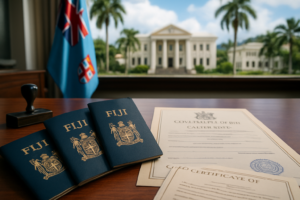
Understanding Dual Citizenship in Fiji
Dual Citizenship in Fiji is legally recognized, which means a person may hold Fijian citizenship together with the citizenship of another country, subject to the laws of both states involved. This is an important development for Fijians living abroad, children born to mixed-nationality families, and foreign nationals with a qualifying connection to Fiji. In practice, however, the ability to keep two nationalities depends not only on Fiji’s rules but also on whether the other country permits dual nationality.
If you are researching Dual Citizenship in Fiji, it is essential to distinguish between three different situations: acquiring Fijian citizenship while keeping another nationality, retaining Fijian citizenship when obtaining a foreign nationality, and proving or formalizing an existing claim to Fijian citizenship by birth, descent, registration, or naturalization. The exact procedure depends on your personal circumstances, the basis of your claim, and the documents you can provide.
Who Is Eligible for Dual Citizenship in Fiji?
Eligibility for Dual Citizenship in Fiji generally arises through the ordinary citizenship routes recognized under Fijian law. While individual cases can vary, the most common categories include the following:
- Citizens by birth: People born in Fiji or otherwise qualifying under the citizenship rules applicable at the time of birth.
- Citizens by descent: Individuals born outside Fiji to a Fijian parent who can pass on citizenship, subject to registration and documentary proof.
- Citizens by registration: Certain spouses, children, or other qualifying persons may be eligible to register as citizens under the applicable legal framework.
- Citizens by naturalization: Foreign nationals who meet residence and legal requirements may apply to become Fijian citizens.
- Former Fijian citizens: Some people who previously lost or gave up Fijian citizenship may be able to resume or confirm their status, depending on current law and the facts of their case.
Dual Citizenship in Fiji is especially relevant for the Fijian diaspora. A person who is already a Fijian citizen and later acquires another nationality may, in many cases, retain Fijian citizenship. Likewise, a person acquiring Fijian citizenship may not need to renounce an existing nationality if both legal systems allow dual status.
Because nationality law is fact-specific, applicants should verify current requirements with the Department of Immigration or other competent Fijian authorities before filing.
Step-by-Step Procedure for Dual Citizenship in Fiji
1. Identify the Correct Citizenship Route
The first step is to determine whether you are applying as a citizen by descent, registration, naturalization, or whether you are seeking recognition or retention of an existing right. This matters because the forms, evidence, and review standards can differ significantly.
2. Confirm That Your Other Nationality Allows Dual Citizenship
Fiji may permit dual nationality, but your other country may restrict it. Before proceeding, confirm whether acquiring or retaining Fijian citizenship will affect your current citizenship. This is one of the most overlooked parts of Dual Citizenship in Fiji planning.
3. Gather Civil Status and Identity Documents
Applicants typically need identity documents, birth records, marriage records if relevant, proof of parentage for descent claims, police clearance where required, passport copies, and photographs. Naturalization applicants may also need evidence of lawful residence, immigration status, and time spent in Fiji.
4. Prepare Foreign Documents for Use in Fiji
If any required document was issued outside Fiji, it may need to be apostilled or legalized before it can be accepted. If the document is not in English, a certified translation is normally required. This step is crucial and often causes delays.
5. Complete the Official Application Forms
Use the correct forms issued by the relevant Fijian authority. Fill them out carefully, ensuring consistency in names, dates, places of birth, and passport details. Any mismatch between documents can trigger requests for clarification or rejection.
6. Pay the Applicable Government Fees
Fees vary depending on the type of citizenship application, whether additional certifications are needed, and whether you are applying from within Fiji or through a Fijian mission abroad. Keep all payment receipts, as they may need to be submitted with the application.
7. Submit the Application
Applications are generally submitted to the competent government office in Fiji or, where available, through a Fijian embassy or consulate abroad. Submit originals or certified copies as instructed. Never assume ordinary photocopies will be accepted.
8. Respond to Any Further Requests
Authorities may request additional documents, interviews, clarifications, or updated police certificates. Prompt responses can reduce overall processing time.
9. Receive the Decision and Complete Final Formalities
If approved, you may need to complete registration, take any required oath or affirmation, and then apply for a Fijian passport or citizenship certificate, depending on the route used.
Required Documents for Dual Citizenship in Fiji
Although requirements vary by case, the following documents are commonly requested for Dual Citizenship in Fiji applications or retention-related filings:
- Completed application form
- Current passport and copies of prior passports if relevant
- Full birth certificate
- National identity card, if applicable
- Proof of Fijian parentage for descent cases
- Parents’ marriage certificate, if relevant to the claim
- Applicant’s marriage certificate or divorce records, if applicable
- Police clearance certificates from Fiji and/or countries of residence, where required
- Proof of lawful residence in Fiji for naturalization cases
- Passport-sized photographs
- Evidence of change of name, if any
- Citizenship certificate, naturalization certificate, or foreign passport showing the second nationality, where relevant
- Fee payment receipt
Applicants should expect authorities to request original documents or properly certified copies. If your personal details differ across documents, include an explanatory affidavit or legal proof of the discrepancy where accepted.
Apostille, Legalization, and Certified Translation of Foreign Documents
For many applicants, the most technical part of Dual Citizenship in Fiji is getting foreign documents into the correct legal form for use in Fiji.
Apostille
If the country that issued your document is part of the Hague Apostille system and Fiji accepts apostilled documents for the relevant purpose, you will generally need to obtain an apostille from the competent authority in the issuing country. An apostille certifies the authenticity of the signature, seal, or stamp on the public document.
Legalization
If apostille is not available or not accepted in your situation, consular or diplomatic legalization may be required. This usually involves certification by the foreign ministry of the issuing country and then authentication by the Fijian embassy, consulate, or another designated authority.
Certified Translation
Any document not in English should usually be translated by a qualified certified translator. In many cases, the translation must be attached to a copy of the original document and include the translator’s certification statement, signature, and contact details. Some authorities may also require notarization of the translation or a translation completed by a translator recognized in the country of issue or submission.
Do not translate documents yourself unless the authority expressly permits it. Self-translations are commonly rejected. Also note that a translation does not replace apostille or legalization; both may be required.
Processing Times
Processing times for Dual Citizenship in Fiji vary depending on the legal basis of the application, the completeness of the file, security checks, and whether overseas verification is needed. Straightforward descent-based or document-confirmation cases may move faster than naturalization cases, which often involve deeper review.
As a practical guide, applicants should expect timelines ranging from several weeks to several months. Delays are common where:
- documents are missing or expired,
- foreign records are not apostilled or legalized correctly,
- names or dates do not match across records,
- police clearances are outdated, or
- the authority must verify records with foreign institutions.
Because procedures can change, it is wise to check current estimates directly with the relevant Fijian office before submitting your application.
Costs and Fees
The total cost of Dual Citizenship in Fiji is usually more than the government filing fee alone. Applicants should budget for:
- official application fees,
- passport or certificate issuance fees,
- notarization or certification charges,
- apostille or legalization fees,
- certified translation costs,
- courier or international postage expenses, and
- possible legal or professional assistance fees.
Government fees can change over time, so applicants should verify the latest schedule before payment. If you are applying from abroad, exchange-rate fluctuations and consular service charges may increase the final total.
Common Pitfalls to Avoid
Many applications for Dual Citizenship in Fiji are delayed by preventable errors. The most common pitfalls include:
- Using the wrong application route: descent, registration, and naturalization are not interchangeable.
- Ignoring the other country’s laws: dual citizenship is a two-country question, not just a Fijian one.
- Submitting unofficial copies: uncertified photocopies may be rejected.
- Failing to apostille or legalize foreign documents: this is one of the leading causes of refusal or delay.
- Providing non-certified translations: informal translations are often not accepted.
- Name inconsistencies: differences caused by marriage, spelling variations, or transliteration should be explained with supporting records.
- Outdated police certificates: some clearances are valid only for a limited time.
- Incomplete residence evidence: naturalization applicants should document their lawful stay in Fiji carefully.
Final Thoughts on Dual Citizenship in Fiji
Dual Citizenship in Fiji offers significant benefits for families, returning members of the diaspora, and foreign nationals with a genuine connection to the country. The key to a smooth process is choosing the correct legal pathway, preparing a complete file, and ensuring that all foreign documents are properly apostilled or legalized and certified-translated into English where necessary.
Because citizenship decisions carry long-term legal consequences, applicants should rely on current official guidance and seek professional advice for complex cases, especially where there are prior renunciations, adoption issues, missing records, or conflicting nationality laws. With careful preparation, the process for Dual Citizenship in Fiji can be managed efficiently and with fewer surprises.
