
When do I need an apostille and how can I get it?
FAQs: When do I need an apostille and how can I get it?
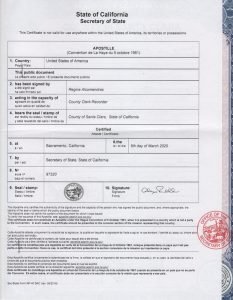
We Americans need an apostille on documents whenever a public document issued in one country needs to be used legally in another country, provided both countries are part of the Hague Apostille Convention.
However, there is a very common and critical misunderstanding regarding the order of operations between an apostille and a translation.
Here is exactly how the process works and when the apostille comes into play:
- The Core Rule: You Apostille the Original, Not the Translation
You almost never apostille a translated document by itself. An apostille is a government certification that proves the original document (like a birth certificate) is authentic. Because a country can only authenticate its own documents, the apostille must be obtained in the country where the document was originally issued.
The standard legal process must follow this strict sequence:
- Obtain the original document (e.g., a US birth certificate or a Mexican acta de nacimiento).
- Get the original document Apostilled in its country of origin.
- Translate everything—including the text of the apostille certificate itself—into the language of the destination country.
- Scenario A: Moving Foreign Documents Into Mexico
If you are a Mexican citizen who had a child abroad, got married abroad, or studied abroad, you will need to bring those foreign documents into Mexico for official use (e.g., dual citizenship, registering a foreign marriage, or enrolling in a Mexican university).
- When it’s needed: For official procedures with Mexican government bodies like INM (Immigration), the Registro Civil (Civil Registry), Mexican courts, or public universities.
- The Process: You must get the foreign document apostilled in the country it was issued (for example, by the Secretary of State if it’s a US document). Once you bring it to Mexico, you must hire a Perito Traductor (a court-certified translator recognized by the Mexican judiciary) to translate both the document and the attached apostille into Spanish.
- Scenario B: Taking Mexican Documents Outside of Mexico
If you are a Mexican citizen moving, studying, or getting married in another Hague Convention country (like the US, Spain, France, etc.), you will need to legalize your Mexican paperwork.
- When it’s needed: For foreign visa applications, foreign university admissions, buying property abroad, or opening foreign corporate bank accounts.
- The Process: You must get your Mexican documents (birth certificates, degrees, transcripts) apostilled in Mexico first. This is done through the Secretaría de Gobernación (for federal documents) or the local state government office where the document was issued. Afterward, you get the document and its apostille translated into English (or the destination country’s language) by a certified translator accepted by that foreign country’s government (like a ATA-certified translator for USCIS in the US).
Summary Checklist of Commonly Affected Documents
If any of these documents are crossing international borders for official legal purposes, they will need an apostille before they are translated:
- Vital Statistics: Birth, marriage, divorce, and death certificates.
- Academic: Diplomas, degrees, and official school transcripts.
- Legal/Corporate: Background checks (police certificates), powers of attorney, affidavits, and articles of incorporation.
⚠️ Note: If the country you are dealing with is not a member of the Hague Convention (for example, Canada, though Canada recently joined, or Cuba), an apostille will not work. You will have to go through a more tedious multi-step process called Consular Legalization instead.
If you are busy and want to avoid stress, it is efficient to hire a professional company like L.A. Apostille Services to provide one-stop services of certified translation, notary, and apostille. For example, L.A. Apostille Services (info@la-apostille.com) knows what requirements your specific government in Latin America has for certified translation, and will provide the apostille with a sworn translation at a reasonable cost.
