
Apostille Notary Near Me: A Complete Guide to Apostille, Notarization, and Certified Translation
What Does “Apostille Notary Near Me” Mean?
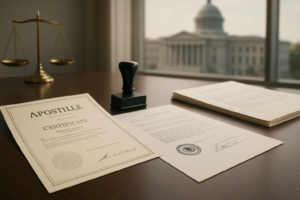
If you are searching online for an apostille notary near me, you likely need to use an American document in another country and want to make sure it is properly authenticated. In the United States, an apostille is a certificate issued by a competent government authority that verifies the authenticity of a public document so it can be recognized in another country that is a member of the Hague Apostille Convention.
Many people use the phrase apostille notary near me because the process often involves both notarization and apostille services. However, these are not the same thing. A notary public verifies identity, witnesses signatures, and notarizes certain documents. An apostille is a separate authentication certificate issued afterward by the Secretary of State or another designated authority, depending on the document type.
For personal, academic, business, and legal documents, the process may also include certified translation if the receiving country or foreign institution requires documents in another language. That is why working with a professional service can save time, reduce errors, and help ensure your documents are accepted abroad.
What Is an Apostille?
An apostille is a form of international document authentication. It confirms that the signature, seal, or stamp on a public document is genuine. Apostilles are used only for countries that participate in the Hague Apostille Convention. If the destination country is not a Hague member, you may need a different process called legalization or embassy authentication instead.
Common documents that may require an apostille include:
- Birth certificates
- Marriage certificates
- Death certificates
- Divorce decrees
- Single status affidavits
- Powers of attorney
- Diplomas and transcripts
- School records
- Corporate documents
- Articles of incorporation
- Certificates of good standing
- Adoption documents
- FBI background checks
When people search for an apostille notary near me, they are often trying to determine whether their specific document needs notarization first, whether it qualifies for a state apostille or federal apostille, and how quickly the process can be completed.
When and Why You Need an Apostille
You may need an apostille when presenting U.S. documents in another country for official use. This requirement commonly arises in both personal and business matters.
Common personal reasons
- Getting married abroad
- Applying for dual citizenship or residency
- International adoption
- Studying overseas
- Working in another country
- Handling inheritance or probate matters abroad
Common business reasons
- Opening a foreign branch or subsidiary
- Registering a company overseas
- Signing international contracts
- Submitting corporate compliance documents
- Using powers of attorney in cross-border transactions
The reason an apostille matters is simple: foreign authorities want proof that your U.S. document is legitimate. Without the proper authentication, your document may be rejected, causing delays, missed deadlines, or additional expenses.
Apostille vs. Notarization: What Is the Difference?
This is one of the most important points to understand when searching for an apostille notary near me. Notarization and apostille are related, but they serve different legal functions.
Notarization
A notary public verifies the identity of the signer, confirms willingness to sign, and completes a notarial certificate. Notarization is often required for private documents such as affidavits, powers of attorney, consent letters, and certain business records.
Apostille
An apostille is issued by a government office after notarization or after review of a certified public document. It authenticates the notary’s signature or the issuing official’s signature and seal so the document can be used internationally.
For example, a birth certificate usually does not need to be notarized if you are obtaining a certified copy from the proper vital records office. A power of attorney, on the other hand, often must be signed before a notary before it can be apostilled.
How Certified Translation Fits Into the Process
Certified translation may be necessary if the destination country, foreign court, university, or agency requires documents in its official language. In many cases, the apostille is attached to the original English document, and a certified translation is prepared for submission abroad. In some cases, the translation itself may also need notarization or additional certification.
Professional certified translation is especially important for:
- Birth and marriage certificates
- Academic transcripts and diplomas
- Court orders and legal filings
- Corporate formation records
- Immigration and civil status documents
Accuracy matters. Even small translation mistakes involving names, dates, or legal terms can create serious problems. A professional service can help coordinate both apostille processing and certified translation so your documents are consistent and compliant.
Step-by-Step: How the Apostille Process Works
If you are looking for an apostille notary near me, here is the typical process from start to finish.
- Identify the destination country. Confirm whether the country is part of the Hague Apostille Convention. If it is not, you may need consular legalization instead of an apostille.
- Determine the document type. Public documents such as birth certificates and court orders follow one path, while private documents such as affidavits or powers of attorney may require notarization first.
- Obtain the correct original or certified copy. Many authorities will reject scanned copies, photocopies, or unofficial printouts. Vital records usually must come from the appropriate state or county office.
- Complete notarization if required. If your document is a private document, it may need to be signed before a commissioned notary public using proper notarial wording.
- Submit for apostille. State-issued documents usually go to the Secretary of State in the state where the document was issued or notarized. Federal documents, such as FBI background checks, are generally processed through the U.S. Department of State after any required federal certification steps.
- Request certified translation if needed. If the receiving party requires a translated version, have it prepared by a professional certified translator.
- Review before international use. Check names, dates, seals, signatures, and destination requirements before sending the documents abroad.
What Documents Are Usually Required?
The exact requirements vary by state, document type, and destination country, but you will generally need:
- The original document or a certified copy
- A completed apostille request form, if required by the issuing authority
- Applicable government filing fees
- A return envelope or shipping label for mail-in requests
- Valid identification for notarization, if signing before a notary
- Any special instructions from the foreign authority receiving the document
For certified translations, you may also need:
- A clear copy of the document to be translated
- The target language
- The correct spelling of names as they should appear
- Any formatting or certification requirements from the receiving institution
Typical Costs for Apostille, Notary, and Translation Services
People searching for an apostille notary near me often want a realistic idea of price. Costs can vary based on state fees, document type, urgency, shipping, and whether notarization or translation is needed.
Typical cost factors include:
- State apostille filing fees
- Notary fees
- Service or courier handling fees
- Expedited processing fees
- Shipping and return delivery costs
- Certified translation fees, often based on word count or document type
Simple apostille requests may be relatively affordable, while complex cases involving multiple documents, rush service, federal processing, or translation can cost more. The best approach is to request a clear quote that outlines each component of the service.
How Long Does It Take?
Timelines depend on where the document was issued, which authority is processing it, whether notarization is needed, and whether you choose standard or expedited service.
In general:
- Notarization can often be completed the same day
- State apostille processing may take from a few business days to several weeks
- Federal apostille processing may take longer
- Certified translation may take one day to several days depending on length and urgency
If you have a deadline for a wedding, visa, school enrollment, or overseas transaction, it is wise to start early. A professional apostille service can often help streamline the process and reduce delays caused by incorrect submissions.
Common Mistakes to Avoid
One reason so many people search for an apostille notary near me is that the process can be confusing. These are some of the most common mistakes that lead to rejection or delay:
- Using the wrong type of document. Uncertified copies, altered records, or unofficial printouts may not qualify.
- Not checking the destination country’s requirements. Some countries need apostilles, while others require legalization.
- Improper notarization. Missing notarial wording, incomplete certificates, or expired commissions can cause rejection.
- Submitting to the wrong authority. State and federal documents are processed differently.
- Overlooking translation requirements. A document may be properly apostilled but still rejected if the translation is missing or inaccurate.
- Waiting until the last minute. International document processing can take longer than expected.
- Name mismatches. Differences in spelling, middle names, or dates across documents can trigger problems abroad.
How to Choose the Right Apostille Notary Service Near You
When evaluating an apostille notary near me, look for a professional service that understands the full document chain, not just notarization. The right provider should be able to explain whether your document needs notarization, apostille, certified translation, or all three.
Consider choosing a service that offers:
- Experience with state and federal apostille processing
- Mobile or convenient notary options
- Guidance on document eligibility
- Certified translation services
- Clear pricing and turnaround times
- Secure handling of sensitive personal and legal records
- Responsive customer support
A knowledgeable team can help you avoid preventable mistakes and make sure your documents are ready for use in the destination country.
Why Professional Help Matters
International document authentication is detail-sensitive. A missing seal, wrong version of a certificate, or incomplete notarial acknowledgment can interrupt your plans. Whether you need a birth certificate apostille, a notarized power of attorney, or a certified translation for overseas use, professional support can simplify the process and provide peace of mind.
At la-apostille.com, clients often seek help because they need a reliable solution for apostille, notary, and certified translation services in one place. Coordinating these services through an experienced provider can save time, reduce stress, and improve the likelihood that your documents will be accepted the first time.
Final Thoughts
If you have been searching for an apostille notary near me, the key is understanding that apostille, notarization, and certified translation each play a different role in preparing documents for international use. The right process depends on the type of document, where it was issued, and the country where it will be presented.
Before submitting anything, confirm the destination country’s requirements, gather the correct originals or certified copies, and make sure any needed notarization and translation are completed properly. With the right guidance, you can move through the process efficiently and avoid costly delays.
Whether your needs involve personal records, business paperwork, or legal documents, professional apostille support can help ensure your documents are authenticated correctly and ready for acceptance abroad.
