
Dual Citizenship in United States: Rules, Eligibility, Documents, Costs, and Step-by-Step Procedures
Understanding Dual Citizenship in United States
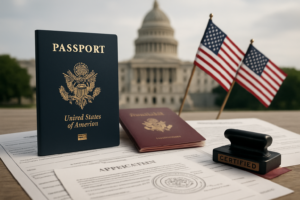
Dual Citizenship in United States means a person is legally recognized as a citizen of the United States and of another country at the same time. Although U.S. law does not formally encourage dual nationality as a policy goal, it does recognize that dual citizenship can exist. In practice, many people become dual citizens automatically at birth, through their parents, or after naturalizing in the United States while retaining another nationality under the law of their other country.
For high-intent applicants and families, the most important point is this: there is no single standalone application called “dual citizenship application” in the United States. Instead, dual citizenship usually arises as the legal result of acquiring or proving U.S. citizenship while also holding another citizenship under foreign law. The exact procedure depends on how the U.S. citizenship claim is based.
Is Dual Citizenship Allowed in the United States?
Yes. The United States allows its citizens to hold another nationality, even though dual nationals must still comply with U.S. law. A U.S. dual citizen must use a U.S. passport to enter and leave the United States, pay taxes if required under U.S. tax law, and remain subject to all obligations of U.S. citizenship. At the same time, the other country may impose its own duties, such as military service, tax filing, or passport rules.
Because each country has its own nationality laws, whether you can keep your original citizenship after becoming a U.S. citizen depends largely on that other country’s rules. Some countries permit dual nationality freely, while others may restrict or automatically revoke citizenship upon voluntary naturalization abroad.
Who Is Eligible for Dual Citizenship in United States?
1. People who acquire both citizenships at birth
You may have Dual Citizenship in United States from birth if:
- You were born in the United States and also acquired another citizenship through one or both parents.
- You were born outside the United States to a U.S. citizen parent and also acquired citizenship of your birth country.
- You were born abroad to parents with different nationalities and qualify under both countries’ laws.
2. Lawful permanent residents who naturalize in the United States
A green card holder may become a U.S. citizen through naturalization if eligibility requirements are met, such as residence, physical presence, good moral character, and English and civics requirements where applicable. If the person’s original country permits retention of nationality, that person may become a dual citizen.
3. Children who derive U.S. citizenship automatically
Some children automatically become U.S. citizens after admission as lawful permanent residents if they are under 18, live in the legal and physical custody of a U.S. citizen parent, and meet the conditions of the Child Citizenship Act. If they also retain another nationality, they may hold dual citizenship.
4. Former U.S. citizens or people documenting an existing claim
Some individuals are not applying for new U.S. citizenship but are proving citizenship they already acquired by birth or derivation. In those cases, they may seek a U.S. passport, Consular Report of Birth Abroad, Certificate of Citizenship, or replacement evidence of citizenship.
Step-by-Step Procedure for Dual Citizenship in United States
The procedure depends on your path to U.S. citizenship. Below are the most common routes.
Path A: Naturalization as a U.S. citizen
- Confirm eligibility. Review your green card status, years of residence, physical presence, tax compliance, selective service registration if applicable, and any criminal or immigration history.
- Check your other country’s dual nationality rules. Before filing, verify whether your current country of citizenship allows you to retain nationality after U.S. naturalization.
- Prepare Form N-400. Complete the Application for Naturalization with supporting evidence.
- Gather documents. Typical evidence includes your green card, identity documents, marriage or divorce records if relevant, court records if applicable, and evidence of trips abroad.
- File the application and pay the fee. Submit online or by mail according to current USCIS instructions.
- Attend biometrics. USCIS may schedule fingerprinting and identity verification.
- Attend the interview and tests. Most applicants must complete an English test and civics test unless exempt.
- Receive a decision. USCIS may approve, continue, or deny the case.
- Take the Oath of Allegiance. U.S. citizenship is typically finalized at the oath ceremony.
- Apply for a U.S. passport. After naturalization, apply for a passport as practical evidence of your U.S. citizenship.
Path B: Claiming U.S. citizenship through a parent
- Determine the legal basis. Identify whether you acquired citizenship at birth abroad or derived it automatically after becoming a permanent resident.
- Collect civil and identity records. Obtain birth certificates, parents’ proof of citizenship, marriage records, custody records, and evidence of the U.S. citizen parent’s residence or physical presence in the United States.
- Choose the correct process. Depending on the facts, you may apply for a U.S. passport, a Consular Report of Birth Abroad, or Form N-600 for a Certificate of Citizenship.
- Submit the application. File with the appropriate authority, such as the U.S. Department of State for a passport or USCIS for a Certificate of Citizenship.
- Attend any required appointment. An interview or document review may be required.
- Receive proof of citizenship. Once approved, you can hold evidence of U.S. citizenship while retaining another nationality if allowed under foreign law.
Required Documents for Dual Citizenship in United States Cases
The exact list varies, but commonly required documents include:
- Valid passport or government-issued photo identification
- Permanent Resident Card, if applying through naturalization
- Full birth certificate
- Marriage certificate, divorce decree, or name change order, if relevant
- Parent’s U.S. passport, naturalization certificate, birth certificate, or Certificate of Citizenship
- Evidence of a U.S. citizen parent’s physical presence or residence in the United States, if claiming citizenship through descent
- Court dispositions or police records, if there is any criminal history
- Military records, if applicable
- Travel history and proof of continuous residence
- Passport-style photos, where required
Always provide clear copies where permitted and originals when specifically requested at an interview or appointment.
Apostille, Legalization, and Certified Translation of Foreign Documents
Foreign civil documents are often central to Dual Citizenship in United States matters. U.S. authorities may require that these documents be properly authenticated and translated before they can be accepted.
When an apostille is needed
If a foreign public document comes from a country that is a member of the Hague Apostille Convention, it may need an apostille from the issuing country’s competent authority. An apostille verifies the authenticity of the signature and seal on the foreign document for international use.
When consular legalization is needed
If the document comes from a country that is not part of the Hague Apostille Convention, the document may need consular legalization instead. This usually involves certification by local authorities, then the foreign ministry, and finally legalization through a U.S. embassy or consulate, depending on current practice and the type of proceeding.
Certified translations for use in the United States
Any document submitted to USCIS or other U.S. authorities in a language other than English must generally be accompanied by a full English translation and a translator’s certification stating that the translation is complete and accurate and that the translator is competent to translate from the foreign language into English. The translation should match the document exactly, including stamps, seals, and annotations where relevant.
Before submitting foreign documents, verify the current documentary standards for the specific agency handling your case. USCIS, the Department of State, and state-level agencies may have different practical requirements.
Processing Times
Processing times for Dual Citizenship in United States matters vary significantly based on the route:
- Naturalization: Often several months to over a year, depending on the USCIS field office and case complexity.
- Certificate of Citizenship: Frequently many months, and sometimes longer than a passport-based claim.
- U.S. passport application based on citizenship claim: Standard passport processing may take several weeks, but complicated citizenship evidence issues can extend timelines.
- Document gathering abroad: Apostilles, legalization, and replacement civil records can add weeks or months.
Applicants should plan for delays, especially if foreign records are difficult to obtain or if there are discrepancies in names, dates, or parentage records.
Costs and Government Fees
Costs depend on the path and the country issuing your foreign documents. Typical expense categories include:
- USCIS filing fees for naturalization or citizenship documentation
- Biometrics fees where applicable
- U.S. passport fees
- Foreign birth, marriage, or police certificate issuance fees
- Apostille or legalization fees
- Certified translation costs
- Notarization, copying, and mailing expenses
- Attorney or professional assistance fees, if used
Because official fees change periodically, applicants should confirm current amounts directly with USCIS, the U.S. Department of State, and the relevant foreign authorities before filing.
Common Pitfalls to Avoid
- Assuming dual citizenship is automatic after naturalization. U.S. citizenship may be granted, but retention of the other citizenship depends on foreign law.
- Using incomplete birth records. Short-form certificates may not be accepted when a full civil record is required.
- Submitting untranslated foreign documents. Missing certified translations can lead to delays or requests for evidence.
- Ignoring apostille or legalization requirements. Improperly authenticated records may be rejected.
- Inconsistencies in names or dates. Even minor discrepancies across passports, birth certificates, and marriage records can create major delays.
- Failing to disclose criminal or immigration issues. Non-disclosure can damage credibility and lead to denial.
- Waiting too long to document a child’s citizenship. Delays can make evidence harder to obtain later.
- Traveling without the correct passport. U.S. citizens, including dual nationals, should use a U.S. passport when entering and leaving the United States.
Practical Tips for a Strong Application
Start by identifying your exact legal basis for U.S. citizenship or naturalization. Create a document checklist early, obtain long-form civil records, and resolve discrepancies before filing. If your case involves foreign records, secure apostilles or legalization well in advance and use a qualified certified translator for all non-English documents. Keep copies of everything submitted and monitor official processing times after filing.
Final Thoughts on Dual Citizenship in United States
Dual Citizenship in United States is legally possible and common, but the procedure is not one-size-fits-all. Your path depends on whether you acquired citizenship at birth, through a parent, or by naturalization. The strongest applications are built on accurate eligibility analysis, complete supporting documents, proper apostille or legalization of foreign records, and precise certified translations for use in the United States.
If your case involves complex family history, foreign registrations, prior immigration issues, or conflicting records, professional legal guidance may help reduce risk and avoid costly delays. With careful preparation, many applicants can successfully establish or maintain dual nationality in the United States while staying compliant with both countries’ laws.
