
Power of Attorney Apostille: How to Apostille a POA for Use Overseas Without Costly Delays
How to Apostille a Power of Attorney for Use Overseas
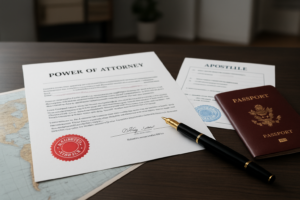
If you need to sign legal authority to someone in another country, getting a power of attorney apostille is often a critical step. Whether you are selling property abroad, managing an inheritance, handling parental consent issues, or authorizing a relative to act on your behalf, the receiving country may reject your document unless it is properly notarized and apostilled.
A power of attorney apostille confirms the authenticity of the signature, seal, or stamp on the document so it can be accepted in another Hague Apostille Convention country. However, many people run into delays because they use the wrong notarization format, send the document to the wrong authority, or overlook country-specific requirements. Understanding the process before you file can save days or even weeks.
What Is a Power of Attorney Apostille?
A power of attorney, or POA, is a legal document that authorizes another person to act for you. For international use, the foreign authority usually wants more than a signed POA. It often requires a power of attorney apostille to verify that the notarization or official certification attached to the document is genuine.
If the destination country is a member of the Hague Apostille Convention, an apostille is typically the final authentication step. If the country is not a Hague member, the document may need legalization instead, which can involve state authentication, U.S. Department of State certification, and embassy or consulate legalization.
Notarization Requirements Before You Request an Apostille
The most common reason a power of attorney apostille is rejected is improper notarization. In most cases, the POA must be signed before a notary public, and the notary certificate must comply with state law. A missing acknowledgment, incomplete venue, expired notary commission, or illegible seal can all cause rejection.
Before submitting your document, check these basics:
- The signer’s name matches the identification used before the notary.
- The notary used the correct certificate wording, often an acknowledgment.
- The notary’s signature and seal are clear and complete.
- The notarization date is accurate and within the notary’s commission period.
- Any attached pages are properly referenced if required.
Some countries, banks, land registries, or foreign lawyers also require the POA to be drafted in a particular format. For example, they may request passport details, property descriptions, tax numbers, witness signatures, or bilingual text. An apostille does not fix content problems, so the document must be substantively acceptable before you begin the authentication process.
State vs. Federal Routing: Where Do You Send the Document?
Knowing whether your power of attorney apostille needs state or federal routing is essential. Most privately signed powers of attorney that are notarized by a U.S. notary public are apostilled by the Secretary of State in the state where the notarization occurred.
State routing usually applies when:
- The POA was signed before a state-commissioned notary public.
- The document is a private legal instrument for real estate, family, or business use.
- The receiving country is a Hague Convention member.
Federal routing is less common for a standard POA, but it may apply if the document is executed by a federal official or if a non-Hague country requires a full legalization chain. In those cases, you may need certification from the U.S. Department of State after any required state-level authentication.
As a practical rule, a notarized POA for overseas property sales, inheritance matters, or family authorization usually starts at the state level. If the destination country is not in the Hague system, additional federal and consular steps may follow.
Country-Specific Mistakes That Delay Real Estate and Family Matters
Even when the apostille itself is properly issued, foreign authorities may still reject the POA for country-specific reasons. This is especially common in real estate transactions and family matters, where local formalities are strict.
Common mistakes include:
- Using the wrong type of notarization. Some countries or local registries expect an acknowledgment rather than a jurat.
- Omitting translation requirements. A certified translation may be required, and in some cases the translation itself must also be notarized or apostilled.
- Failing to include witness signatures. Certain jurisdictions require one or two witnesses in addition to notarization.
- Submitting an outdated POA. Some land offices or banks only accept powers of attorney signed within a recent time frame.
- Using broad language when specific authority is required. A general POA may be rejected for a property sale, mortgage, child travel consent, or probate matter if exact powers are not listed.
- Ignoring local drafting standards. Civil law countries may require precise legal language, identity details, or tax identification numbers.
These issues can derail a closing, delay access to bank accounts, postpone court filings, or interrupt urgent family arrangements. For that reason, it is wise to confirm the receiving country’s document rules with the foreign lawyer, consulate, bank, or land registry before requesting the power of attorney apostille.
Step-by-Step: How to Get a Power of Attorney Apostille
- Prepare the POA in the format required by the receiving country or institution.
- Sign the document before a properly commissioned notary public.
- Review the notarization for errors, seal clarity, and complete certificate wording.
- Submit the notarized POA to the correct Secretary of State for apostille issuance.
- If the country is not a Hague member, confirm whether further U.S. Department of State and consular legalization is required.
- Arrange translation or additional local formalities if requested by the destination country.
Final Thoughts
A power of attorney apostille is more than a routine stamp. It is a key compliance step that can determine whether your document is accepted for an overseas property transfer, inheritance proceeding, parental authorization, or other cross-border legal matter. The safest approach is to get the notarization right, route the document to the correct authority, and verify country-specific requirements before submission.
If timing matters, professional review can help prevent rejection and avoid repeating the process. For international real estate and family matters, a correctly prepared power of attorney apostille can save significant time, cost, and stress.
—
해외 사용을 위한 위임장 아포스티유 받는 방법
해외에서 누군가에게 법적 권한을 위임해야 하는 경우, power of attorney apostille, 즉 위임장 아포스티유는 매우 중요한 절차가 되는 경우가 많습니다. 해외 부동산 매매, 상속 처리, 부모 동의 문제, 또는 가족에게 본인을 대신해 행동할 권한을 부여하는 상황에서, 문서가 적절하게 공증되고 아포스티유를 받지 않으면 상대 국가에서 접수를 거부할 수 있습니다.
power of attorney apostille는 문서에 포함된 서명, 인감, 직인의 진정성을 확인하여 헤이그 아포스티유 협약 가입국에서 해당 문서를 인정받을 수 있도록 해줍니다. 그러나 많은 분들이 잘못된 공증 형식을 사용하거나, 잘못된 기관으로 서류를 보내거나, 국가별 요구사항을 놓쳐서 지연을 겪습니다. 신청 전에 절차를 정확히 이해하면 며칠에서 몇 주까지도 절약할 수 있습니다.
위임장 아포스티유란 무엇입니까?
위임장(POA)은 다른 사람이 본인을 대신해 행동할 수 있도록 권한을 부여하는 법률 문서입니다. 해외에서 사용하려면 단순히 서명된 위임장만으로는 부족한 경우가 많습니다. 외국 기관은 대개 공증 또는 공적 인증이 진짜라는 점을 확인하기 위해 power of attorney apostille를 요구합니다.
목적 국가가 헤이그 아포스티유 협약 가입국이라면, 아포스티유가 일반적으로 최종 인증 단계입니다. 반대로 비가입국이라면 아포스티유가 아니라 영사 확인 또는 공증 문서의 합법화 절차가 필요할 수 있으며, 이 경우 주정부 인증, 미국 국무부 인증, 대사관 또는 영사관 인증까지 이어질 수 있습니다.
아포스티유 신청 전 공증 요건
power of attorney apostille가 거절되는 가장 흔한 이유는 공증이 올바르지 않기 때문입니다. 대부분의 경우 위임장은 공증인 앞에서 서명되어야 하며, 공증 문구는 해당 주의 법률 요건을 충족해야 합니다. 확인 문구 누락, 관할지 표시 미비, 공증인 임기 만료, 불분명한 직인 등은 모두 반려 사유가 될 수 있습니다.
서류를 제출하기 전에 다음 사항을 확인해야 합니다.
- 서명자의 이름이 공증 시 사용한 신분증과 일치하는지 확인합니다.
- 공증인이 올바른 인증 문구를 사용했는지 확인합니다. 일반적으로 acknowledgment 형식이 요구됩니다.
- 공증인의 서명과 직인이 선명하고 완전한지 확인합니다.
- 공증 날짜가 정확하며 공증인 임기 내에 이루어졌는지 확인합니다.
- 필요한 경우 첨부 페이지가 적절히 참조되었는지 확인합니다.
또한 일부 국가, 은행, 등기소, 해외 변호사는 위임장 자체가 특정 형식으로 작성되기를 요구합니다. 예를 들어 여권 정보, 부동산 표시, 세금번호, 증인 서명, 이중 언어 문안 등이 필요할 수 있습니다. 아포스티유는 문서 내용상의 문제를 해결해주지 않으므로, 인증 절차를 시작하기 전에 문서 자체가 실질적으로도 적합해야 합니다.
주정부 경로와 연방 경로: 어디로 보내야 합니까?
power of attorney apostille가 주정부 경로인지 연방 경로인지 판단하는 것은 매우 중요합니다. 대부분의 사인 문서 위임장은 미국 주 공증인 앞에서 공증되므로, 공증이 이루어진 주의 Secretary of State에서 아포스티유를 발급받습니다.
일반적으로 다음과 같은 경우 주정부 경로가 적용됩니다.
- 위임장이 주정부에서 위촉된 공증인 앞에서 서명된 경우
- 문서가 부동산, 가족, 사업 관련 사문서인 경우
- 제출 대상 국가가 헤이그 협약 가입국인 경우
연방 경로는 일반적인 위임장에서는 드물지만, 문서가 연방 공무원에 의해 작성되었거나 비가입국 제출을 위해 전체 합법화 절차가 필요한 경우 적용될 수 있습니다. 이 경우 주정부 차원의 인증 후 미국 국무부 인증이 추가로 필요할 수 있습니다.
실무적으로 보면, 해외 부동산 매매, 상속, 가족 관련 권한 부여를 위한 공증 위임장은 대개 주정부 단계에서 시작합니다. 목적 국가가 헤이그 체계 밖에 있다면 이후 연방 및 영사 인증 절차가 추가될 수 있습니다.
부동산 및 가족 문제를 지연시키는 국가별 실수
아포스티유가 적법하게 발급되었더라도, 국가별 요구사항을 충족하지 못하면 외국 기관에서 위임장을 거부할 수 있습니다. 이러한 문제는 특히 부동산 거래와 가족 문제에서 자주 발생하며, 현지 형식 요건이 매우 엄격한 경우가 많습니다.
대표적인 실수는 다음과 같습니다.
- 잘못된 공증 유형 사용: 일부 국가나 현지 등기기관은 jurat가 아니라 acknowledgment를 요구합니다.
- 번역 요건 누락: 공인 번역이 필요할 수 있으며, 경우에 따라 번역문 자체도 공증 또는 아포스티유가 필요합니다.
- 증인 서명 누락: 어떤 지역은 공증 외에 1명 또는 2명의 증인을 요구합니다.
- 오래된 위임장 제출: 일부 등기소나 은행은 최근 일정 기간 내에 작성된 위임장만 인정합니다.
- 구체적 권한이 필요한데 포괄적 문구만 사용: 부동산 매매, 담보 설정, 자녀 관련 동의, 상속 절차에서는 구체적인 권한이 열거되지 않으면 일반 위임장이 거부될 수 있습니다.
- 현지 문안 기준 무시: 대륙법 국가에서는 정확한 법률 문구, 신원 정보, 세금식별번호 등을 요구하는 경우가 많습니다.
이러한 문제는 거래 종결 지연, 계좌 접근 지연, 법원 제출 지연, 긴급한 가족 문제 차질로 이어질 수 있습니다. 따라서 power of attorney apostille를 신청하기 전에 현지 변호사, 영사관, 은행, 등기소를 통해 목적 국가의 문서 요건을 반드시 확인하는 것이 바람직합니다.
위임장 아포스티유 절차 단계별 안내
- 목적 국가 또는 제출 기관이 요구하는 형식에 맞춰 위임장을 준비합니다.
- 적법하게 위촉된 공증인 앞에서 문서에 서명합니다.
- 공증 문구 오류, 직인 선명도, 인증 문구 완전성을 점검합니다.
- 공증된 위임장을 해당 주 Secretary of State에 제출하여 아포스티유를 발급받습니다.
- 목적 국가가 헤이그 비가입국이라면 미국 국무부 및 영사 합법화가 추가로 필요한지 확인합니다.
- 목적 국가가 요구하는 번역 또는 추가 형식을 진행합니다.
마무리
power of attorney apostille는 단순한 도장이 아닙니다. 이는 해외 부동산 이전, 상속 절차, 부모 권한 부여, 기타 국제 법률 문제에서 문서 수리 여부를 좌우할 수 있는 핵심 요건입니다. 가장 안전한 방법은 공증을 정확히 하고, 올바른 기관으로 접수하며, 제출 전에 국가별 요구사항을 확인하는 것입니다.
시간이 중요한 경우에는 전문가 검토를 통해 반려를 예방하고 절차를 다시 반복하는 일을 줄일 수 있습니다. 국제 부동산 및 가족 문제에서는 정확하게 준비된 power of attorney apostille가 시간, 비용, 스트레스를 크게 절감해 줄 수 있습니다.
