
What Is Apostille Notary? A Complete U.S. Guide to Apostilles, Notarization, and Certified Translation
What Is Apostille Notary?
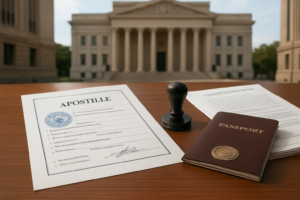
If you have been searching for what is apostille notary, you are likely preparing documents for use in another country and want to make sure they are legally accepted. In the United States, the phrase is commonly used to describe a process that involves both notarization and apostille certification, even though they are not the same thing.
An apostille is an official certificate issued by a competent government authority that authenticates the origin of a public document for use in another country that is part of the Hague Apostille Convention. A notary, or notary public, is a state-commissioned official who verifies identity, witnesses signatures, and helps prevent fraud. In many cases, a document must first be notarized before it can be apostilled.
So, when people ask, what is apostille notary, the practical answer is this: it usually refers to the combined process of getting a document notarized when required and then obtaining an apostille so the document can be recognized abroad.
Why Apostille and Notarization Matter
International document use can be complicated because foreign authorities need proof that a U.S. document is genuine. An apostille provides that proof in countries that accept apostilles under the Hague Convention. Notarization may be part of the chain because some documents are not considered ready for apostille until a notary has properly acknowledged the signature or certified the statement.
These services are commonly needed for:
- Marriage abroad
- Dual citizenship applications
- International adoptions
- Studying overseas
- Working in another country
- Opening a foreign bank account
- International business contracts
- Power of attorney for use overseas
- Birth, marriage, death, or divorce records
- Corporate formation and compliance documents
Without proper notarization or apostille certification, your documents may be delayed, rejected, or deemed invalid by foreign institutions.
What Does an Apostille Actually Certify?
An apostille does not certify that the contents of your document are true. Instead, it certifies the authenticity of the signature, seal, or stamp on the document. For example, if a notary public notarizes your affidavit, the apostille confirms that the notary’s commission and signature are valid. If you submit a certified vital record issued by the state, the apostille confirms the issuing official’s authority.
This distinction is important. When asking what is apostille notary, many people assume the apostille validates the underlying facts in the document. It does not. It validates the official origin of the document or notarization.
When Do You Need an Apostille?
You generally need an apostille when a U.S. document will be presented in a foreign country that is a member of the Hague Apostille Convention. Common examples include:
- A birth certificate for citizenship or residency abroad
- A marriage certificate for registering a marriage in another country
- A diploma or transcript for study or employment overseas
- A notarized power of attorney for property or legal matters abroad
- Corporate documents for foreign business transactions
- FBI background checks for visas or immigration purposes
If the destination country is not part of the Hague Apostille Convention, you may need a different process called authentication and legalization rather than an apostille. That process can involve state certification, U.S. Department of State authentication, and legalization by the foreign consulate.
Do All Documents Need to Be Notarized Before Apostille?
No. This is one of the most common points of confusion around what is apostille notary. Some documents need notarization before apostille, while others do not.
Documents that often require notarization first
- Affidavits
- Power of attorney forms
- Consent letters
- Personal statements
- Copies of certain documents, when permitted
- Business letters or authorizations
Documents that are often apostilled as certified originals
- Birth certificates
- Marriage certificates
- Death certificates
- Divorce decrees
- Court orders
- State-issued corporate records
For vital records and court documents, the apostille is usually attached to a certified copy issued by the proper authority, not a photocopy and not a notarized copy unless specifically allowed.
Step-by-Step: How the Apostille Notary Process Works
If you want a practical answer to what is apostille notary, the best way is to understand the process from start to finish.
- Identify the destination country. Confirm whether the country where the document will be used accepts apostilles under the Hague Convention.
- Determine the document type. Find out whether your document is a vital record, court record, academic record, business document, or a personal statement.
- Check whether notarization is required. Some documents must be signed before a notary public. Others must be obtained as certified originals from the issuing authority.
- Prepare the correct version of the document. This may mean ordering a certified copy of a birth certificate or drafting a power of attorney for notarization.
- Complete notarization if needed. The signer appears before a notary, presents valid identification, and signs the document or acknowledges a prior signature.
- Submit the document for apostille. In most cases, state-issued documents go to the Secretary of State in the state where they were issued or notarized. Federal documents, such as FBI background checks, usually go through the U.S. Department of State after the proper federal certification path.
- Pay the required fees. Fees vary by state, document type, and processing speed.
- Receive the apostilled document. The apostille is attached to the document and can then be used in the destination country.
- Translate the document if required. Some foreign authorities require a certified translation of the original document, the apostille, or both.
What Documents Are Commonly Required?
The exact documents depend on your purpose, but clients often need apostilles for:
- Birth certificates
- Marriage certificates
- Death certificates
- Divorce decrees
- Single status affidavits
- Power of attorney documents
- Passports or ID copies, when properly notarized if acceptable
- Academic diplomas and transcripts
- Adoption dossiers
- Corporate bylaws, certificates of formation, and board resolutions
- FBI background checks
- IRS letters and federal records
You may also need supporting items such as a completed request form, prepaid return shipping label, payment for government fees, and a copy of your identification depending on the service provider or agency requirements.
How Certified Translation Fits In
Certified translation is often part of the same international document workflow. If the receiving country does not accept documents in English, you may need a certified translation. This is a translation accompanied by a signed statement from the translator or translation company attesting that the translation is complete and accurate.
Here is how translation may apply:
- Before apostille: In some cases, a translated document may need to be notarized, depending on the receiving authority’s instructions.
- After apostille: Some countries require the original apostilled document to be translated so local authorities can review both the underlying document and the apostille certificate.
- For immigration, court, or academic use: Certified translations may be required even if the apostille itself is accepted.
Because requirements vary by country and institution, it is wise to confirm whether you need translation of the document, the apostille, or both. A professional apostille and translation service can help prevent expensive errors.
Typical Costs for Apostille, Notary, and Translation Services
Costs can vary significantly based on the state, document type, urgency, and whether you use a professional service. Still, a general range can help you plan.
Common cost categories
- Notary fees: Often set by state law and may range from a few dollars per signature to higher mobile notary travel fees.
- State apostille fees: Usually charged per document and vary by state.
- Federal authentication fees: May apply for federal documents.
- Service fees: Professional apostille agencies charge handling, review, processing, and courier coordination fees.
- Shipping fees: Overnight or international courier delivery can add to the total.
- Certified translation fees: Often priced per page or per word, depending on language pair and complexity.
For a straightforward state-level apostille, total costs may be modest if you handle it yourself. For urgent, multi-document, or international cases involving notarization, translation, and courier service, the total can be considerably higher. The benefit of professional assistance is reduced risk of rejection and faster turnaround.
Typical Timelines
One reason people search what is apostille notary is that they are on a deadline. Processing times depend on the issuing authority and whether expedited service is available.
- Notarization: Often same day
- Certified copy retrieval: Same day to several weeks, depending on the agency
- State apostille processing: A few business days to several weeks
- Federal authentication: Often longer than state processing
- Certified translation: Same day for short documents to several business days for larger files
- Shipping time: Overnight to several days, depending on destination and carrier
If your matter is time-sensitive, start early. Delays often happen because the wrong document version was submitted, the notarial certificate was incomplete, or the destination country’s requirements were misunderstood.
Common Mistakes to Avoid
Understanding what is apostille notary also means knowing what can go wrong. These are some of the most frequent mistakes:
- Submitting a photocopy instead of a certified original. Many documents, especially vital records, must come from the issuing authority.
- Using the wrong notarial wording. An incomplete or improper notarial certificate can cause rejection.
- Not checking the destination country’s requirements. Apostille rules, translation requirements, and document formats vary.
- Assuming every document can be notarized the same way. Some documents need original signatures; others need official certified copies.
- Waiting until the last minute. Government processing and shipping can take longer than expected.
- Sending documents to the wrong authority. State documents and federal documents follow different paths.
- Forgetting translation requirements. A document may be apostilled correctly but still rejected if it is not translated properly.
- Signing before meeting the notary when the document requires witnessing. Some notarial acts require the signature to occur in front of the notary.
How to Know Whether You Need Professional Help
Some people successfully handle apostilles on their own, especially for a single straightforward document. However, professional help is often worth considering if:
- You have multiple documents from different states
- You need both apostille and certified translation
- You are on a tight deadline
- The receiving country has strict formatting requirements
- You are unsure whether the document needs notarization first
- You are dealing with federal documents or consular legalization
A professional service can review your documents before submission, identify missing certifications, coordinate notarization where needed, manage courier logistics, and reduce the chance of rejection.
Final Answer: What Is Apostille Notary?
In simple terms, what is apostille notary? It is the process people use to describe preparing a document for international use by handling any required notarization and then obtaining an apostille from the proper authority. Notarization confirms the identity of the signer and the validity of the notarial act. The apostille confirms the authenticity of the official signature or seal so the document can be accepted in another Hague Convention country.
Whether you are sending a birth certificate, power of attorney, diploma, corporate record, or personal affidavit abroad, accuracy matters. The right document version, the correct notarization, proper apostille processing, and certified translation when needed can save you time, money, and stress.
If you are preparing documents for international use, a reliable apostille, notary, and certified translation service can help ensure every step is handled correctly the first time.
