Getting an Apostille for China

Navigating the Document Authentication Process for China: The Historic Transition to the Apostille System

For decades, using an American document in the People’s Republic of China required navigating one of the most rigorous and time-consuming administrative tracks in international law. Whether you were an individual planning to work in Shanghai, an expat registering a marriage, or a corporation expanding into the Beijing market, your paperwork had to go through a complex, multi-layered gauntlet known as Consular Legalization.

However, a major bureaucratic shift occurred recently that completely transformed this pipeline. Understanding how this process works now, and knowing how to bypass standard government delays, is essential for anyone handling cross-border affairs.


The Historic Shift: From Consular Legalization to the Apostille

On November 7, 2023, China officially became a contracting state to the Hague Apostille Convention (formally the Convention Abolishing the Requirement of Legalisation for Foreign Public Documents).

This historic milestone completely eliminated the traditional, multi-step consular authentication process at the Chinese Embassy and regional Chinese Consulates for documents originating from other member countries, including the United States.

To appreciate how much simpler the process is today, it helps to contrast the old system with the new standard:

The Old Way: Consular Legalization

Previously, validating a U.S. document for China required a strict chain of authentication:

  1. Local Notarization: A public notary had to witness and seal the document.

  2. County Clerk Certification: In many jurisdictions, the local county clerk had to verify the notary’s commission.

  3. State Authentication: The Secretary of State had to issue a specialized authentication certificate (explicitly structured for non-Hague nations).

  4. Chinese Embassy/Consulate Legalization: Finally, the physical document had to be submitted to the Chinese Embassy in Washington, D.C., or the regional Chinese Consulate-General (such as the one in Los Angeles) holding jurisdiction over that state. Consular officials would review the state seal and apply an official Chinese legalization sticker. This final step alone often took weeks of waiting and strict jurisdictional scheduling.

The New Way: The One-Step Apostille

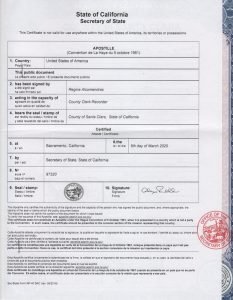
Now that China is a member of the Hague Convention, the tedious embassy legalization step has been completely bypassed. Today, any public or notarized document issued in the United States only requires an Apostille from the competent domestic authority—typically the Secretary of State—to be legally recognized by authorities, financial institutions, and courts within mainland China.

Note: While the Chinese Embassy no longer places legalization stickers on public documents from Hague member nations, the foundational preparation of your documents remains incredibly strict. If your paperwork is improperly prepared before it reaches the state level, it will be rejected by Chinese agencies.


Common Documents Requiring Authentication for China

The transition to the Apostille system covers the same vital, personal, and corporate documents that previously choked the embassy pipelines. These generally fall into three categories:

1. Corporate and Commercial Papers

Foreign trade, intellectual property enforcement, and foreign direct investment (FDI) in China require flawlessly authenticated business records. These include:

  • Articles of Incorporation and Bylaws

  • Certificates of Good Standing

  • Board Resolutions and Minutes

  • Business Contracts and Invoices

  • Powers of Attorney (POA): Crucial for authorizing an agent to sign contracts or manage corporate corporate entities in China on your behalf.

2. Personal and Legal Documents

If you are moving to China for personal reasons, settling an estate, or handling legal matters, you will need an apostille on:

  • Powers of Attorney (Poder Notarial): Specifically formatted to meet the rigid requirements of Chinese civil law.

  • Background checks (FBI or local police clearances)

  • Copies of Passports or identity verifications

3. Civil and Educational Records

To secure a Chinese work visa (Z Visa), establish residency, or register a cross-border life event, you must present state-certified records:

  • Birth Certificates and Marriage Certificates

  • Diplomas, transcripts, and academic degree certifications


Why “Do-It-Yourself” State Apostilles Create Friction

Even though the Chinese Embassy step has been eliminated, getting an apostille directly from state authorities—such as the California Secretary of State—presents major hurdles for individuals and businesses acting on tight timelines.

If you attempt to mail your documents to the Secretary of State, processing times can drag out for weeks or even months. Furthermore, the state office merely certifies the notary’s signature; they do not check if your document adheres to the strict formatting conventions that Chinese authorities demand (such as specific bilingual layouts or exact passport-name matching). One tiny notary error or an incomplete seal will result in a total rejection by the state, forcing you to restart the clock.


How LA Apostille Services Accelerates the Process

For individuals and corporations who cannot afford to wait weeks for vital mail-in queues, utilizing an expedited agency is the safest and fastest route. LA Apostille Services acts as your direct liaison, navigating the rigorous state authentication process on your behalf with unparalleled speed.

Instead of waiting for the standard government postal turnaround, LA Apostille Services leverages hand-delivery protocols and expert review to facilitate ultra-fast processing:

Same-Day Apostille Service

If you have an urgent legal deadline, an expiring visa, or a critical corporate acquisition closing in China, LA Apostille Services can secure a California apostille on the same day you submit your documents. Their team carries your paperwork directly to the Secretary of State’s regional office, bypasses consumer lines, and hands you back a fully legalized document by the close of business.

Next-Day Apostille Service

For transactions that are pressing but allow a 24-hour window, the next-day service offers a highly reliable, cost-effective alternative. Your documents are meticulously reviewed for notary compliance, processed through the state authorities overnight, and ready for international shipping the following morning.


Crucial Practical Tips for Sending Documents to China

Even with a fast-tracked apostille, keep these international best practices in mind to prevent local rejections in China:

  • No Tampering: Once the Secretary of State attaches the apostille certificate to your document using a staple or rivet, do not remove it for any reason. Unstapling or scanning pages individually by breaking the seal instantly invalidates the authentication.

  • Exact Matching: Ensure your full legal name on corporate forms or Powers of Attorney matches your passport exactly. Middle names cannot be abbreviated if they are spelled out on your official ID.

  • Originals Required: Chinese ministries, banks, and registries almost universally demand the physical, original document with the wet-ink apostille stamp attached. Digital scans or photocopies are rarely accepted for final legal processing.

  • Certified Translations: While the apostille proves the authenticity of the document, local offices in China will typically require a certified Chinese translation of the English text. It is best practice to have this handled by a certified translator recognized by the receiving agency in China.

By understanding the streamlined Hague Convention regulations and partnering with an expedited provider like LA Apostille Services, you can cut through months of administrative red tape and ensure your documents are legally bulletproof in China in 24 to 48 hours.

USCIS认证翻译

USCIS认证翻译 处理美国公民及移民服务局(USCIS)的手续可能让人感觉像是在走进一个繁琐的迷宫。如果你正在申请绿卡、签证、归化或家庭申请,且你的支持性生活记录来自非英语国家,那么你的第一个难关就是文件翻译。 根据联邦法规(8 CFR 103.2(b)(3)),USCIS要求任何提交支持申请的外语文件必须附有完整且经过认证的英文翻译。 理解这些严格的翻译规则至关重要。一次疏漏——例如缺少印章翻译或不完整的认证声明——都可能导致提交证据请求(RFE),暂停您的移民时间表。 USCIS认证翻译的五项核心要求 许多申请人误以为“认证翻译”意味着文件必须由政府官员处理或盖有国际认证。就USCIS而言,这只是个误区。 USCIS不要求提交的翻译民事文件必须获得认证,联邦法律也没有严格要求翻译必须公证。相反,合规基于五个具体标准: 完全、逐字准确:翻译必须是原始文档的精确、字面翻译。摘要或意译摘要将被立即拒绝。 所有视觉元素的翻译:文档中的每一段文字都必须进行翻译。这包括政府印章、墨水印章、条形码、序列号、签名,甚至还有淡淡的手写边注。如果部分文字被物理撕裂或难以辨认,译者必须明确注明为[不可辨]。 镜像视觉格式: 为了确保审阅流程顺畅,翻译后的文档应尽可能在视觉上还原原文的布局。如果原始出生证明使用多栏表格,英文翻译应使用匹配表格,以便审核官员逐行交叉核对文本。 强制认证声明:翻译文件必须附有译者签署的正式声明。必须明确说明: 译者必须流利且有能力将原语言翻译成英语。 翻译是根据他们所知的完整且准确的。 译者元数据: 认证页面必须包含译者的印刷全名、实体签名、执行日期及当前联系方式。 关键利益冲突规则: 虽然联邦指南规定“任何能通晓两种语言的人”都可以进行翻译,但USCIS强烈反对自助翻译或由家属完成翻译。为避免偏见或文件篡改的嫌疑,您应始终聘请独立的第三方专业译者或代理机构。…

Guía Esencial de Servicios de Apostilla

Guía Esencial de Servicios de Apostilla: Cómo Validar Documentos Internacionales

En un mundo cada vez más globalizado, las transacciones legales, profesionales y personales entre diferentes países se han convertido en parte de la vida cotidiana. Ya sea que esté planeando mudarse al extranjero, comprar una propiedad en otro país, establecer un negocio en el extranjero o gestionar una herencia internacional, se enfrentará rápidamente a un obstáculo administrativo crítico: asegurarse de que sus documentos nacionales sean reconocidos como legalmente válidos por un gobierno extranjero.

Si usted es un ciudadano o residente estadounidense que realiza trámites ante autoridades extranjeras, la notarización nacional estándar o el sello del estado rara vez son suficientes. En su lugar, es casi seguro que se le solicitará una Apostilla.

El mundo de la autenticación de documentos internacionales puede resultar abrumador, lleno de terminología legal compleja y procedimientos burocráticos estrictos. Esta guía completa explica exactamente qué es una apostilla, cuándo se necesita (con un enfoque especial en los trámites entre EE. UU. y México) y cómo obtenerla de manera sencilla a través de servicios profesionales en el sur de California.


¿Qué es una Apostilla? Conceptos Básicos

En esencia, una apostilla es un certificado especializado emitido por una autoridad gubernamental designada que autentica el origen de un documento público.

Este concepto nació del Convenio de La Haya del 5 de octubre de 1961, conocido formalmente como el Convenio de la Apostilla. Antes de este tratado, validar un documento para su uso internacional era una pesadilla de múltiples etapas conocida como “legalización”. Requería que un documento fuera certificado por funcionarios locales, luego por funcionarios estatales, después por el gobierno nacional y, finalmente, por la embajada o el consulado del país de destino.

El Convenio de La Haya simplificó drásticamente este proceso para las naciones miembros. Bajo este tratado, los países participantes acordaron eliminar la larga cadena de legalización consular. En su lugar, un único certificado —la apostilla— adjunto por la autoridad designada del país de origen es todo lo que se requiere para certificar que:

  1. La firma en el documento es auténtica.

  2. La persona que firma el documento actuó en una capacidad legítima.

  3. La identidad del sello o timbre en el documento está verificada.

Distinción Importante: Una apostilla no valida ni certifica el contenido real del documento. Simplemente demuestra a un funcionario extranjero que el documento en sí es auténtico, oficial y legalmente vinculante en su país de origen.


¿Cuándo se Necesita una Apostilla?

Por lo general, necesitará una apostilla si cumple con dos condiciones específicas:

  • El país donde se emitió el documento y el país donde se utilizará son miembros del Convenio de la Apostilla de La Haya.

  • La entidad extranjera (una escuela, tribunal, banco o agencia gubernamental) lo solicita explícitamente para procesar sus trámites.

Los tipos de documentos que comúnmente requieren una apostilla se dividen en tres categorías principales:

1. Documentos Civiles y de Registro Vital

Estos son documentos emitidos por el estado que certifican eventos importantes de la vida, incluidos actas de nacimiento, actas de matrimonio, actas de defunción y sentencias de divorcio. Los gobiernos extranjeros requieren apostillas en estos documentos para verificar la identidad, el linaje y el estado civil para visas, solicitudes de ciudadanía o matrimonios legales en el extranjero.

2. Documentos Legales y Personales

Esta categoría incluye Poderes Notariales (POA), testamentos, declaraciones juradas (affidavits) y documentos corporativos (como artículos de incorporación o estatutos). Por ejemplo, si no puede viajar al extranjero para firmar una escritura o gestionar una herencia, un banco o notario extranjero requerirá un Poder Notarial apostillado para permitir que un agente actúe en su nombre.

3. Documentos Educativos

Si planea estudiar o trabajar en el extranjero, las universidades y los empleadores extranjeros generalmente exigirán copias apostilladas de sus diplomas, expedientes académicos (transcripts) y constancias de estudios para verificar sus calificaciones.


Caso de Estudio Real: Utilización de Documentos de EE. UU. en México

Para comprender cómo funciona esto en la vida diaria, analicemos uno de los flujos de documentos internacionales más comunes: el de Estados Unidos y México.

México es un miembro destacado del Convenio de la Apostilla de La Haya. Por lo tanto, cualquier documento oficial generado en los EE. UU. debe llevar una apostilla antes de que pueda ser reconocido legalmente por las autoridades, bancos o tribunales mexicanos. Si intenta presentar un documento estándar de los EE. UU. en México sin este sello, será rechazado de inmediato.

Considere estos tres escenarios increíblemente comunes donde la apostilla es obligatoria para México:

Actas de Nacimiento de EE. UU.

Si un niño nace en los Estados Unidos de padres mexicanos, los padres a menudo desean registrar al niño para obtener la doble nacionalidad mexicana. Para hacer esto en un consulado mexicano o en la oficina del Registro Civil, el acta de nacimiento estadounidense debe estar apostillada por el estado en el que ocurrió el nacimiento. La misma regla se aplica a los adultos que se mudan a México con visas de residencia permanente.

Actas de Matrimonio

¿Se va a mudar a México con su cónyuge, van a comprar una propiedad juntos o están solicitando visas de dependientes económicos? México requerirá que su acta de matrimonio de los EE. UU. esté oficialmente apostillada. Esto demuestra a las autoridades de inmigración o fiscales mexicanas que su unión legal es reconocida bajo los estándares internacionales.

Poder Notarial

Este es quizás el documento más crítico para los bienes raíces transfronterizos y la planificación patrimonial. Supongamos que usted reside en California pero hereda una propiedad en Guadalajara, o está comprando un condominio frente al mar en Cabo San Lucas. Si no puede estar físicamente presente en México para firmar los contratos finales ante un Notario Público mexicano, debe redactar un Poder Notarial en los EE. UU.

Dado que México utiliza un sistema de Derecho Civil, el Poder Notarial debe ser muy específico y, a menudo, se redacta en un formato bilingüe. Una vez que lo firme ante un notario público estadounidense, debe ser apostillado. Sin esa apostilla, el representante que elija en México no podrá firmar un solo documento ni realizar movimientos en una cuenta bancaria a su nombre.


Los Desafíos de Hacerlo por Cuenta Propia: Por Qué el “Hazlo Tú Mismo” Causa Retrasos

En teoría, obtener una apostilla parece sencillo: se busca la oficina gubernamental adecuada, se paga una tarifa y se obtiene el sello. En la realidad, la ruta del “Hazlo Tú Mismo” está plagada de trampas administrativas que frecuentemente conducen a solicitudes rechazadas y plazos vencidos.

Algunos de los obstáculos incluyen:

  • Confusión de Jurisdicción: Los documentos federales (como las verificaciones de antecedentes del FBI) requieren una apostilla del Departamento de Estado de los EE. UU. en Washington, D.C. Los documentos estatales (como las actas de nacimiento) deben ir a la Secretaría de Estado de ese estado específico. Los documentos del condado a menudo requieren una capa adicional de autenticación del secretario del condado antes de que el estado los procese.

  • Errores Notariales: Si un notario local no utiliza la redacción legal exacta requerida por su estado, o si su comisión ha expirado, la Secretaría de Estado rechazará la solicitud de apostilla por completo.

  • Plazos Estrictos: Muchos procesos internacionales, especialmente las herencias o las compras de propiedades, están sujetos a plazos legales estrictos. Esperar semanas a que una solicitud enviada por correo sea procesada por una oficina estatal, solo para descubrir que fue rechazada, puede causar un enorme efecto dominó de problemas legales.


La Alternativa Eficiente: LA Apostille Services

Para los residentes y empresas del sur de California, no es necesario enfrentarse solos a este laberinto burocrático. Puede agilizar cómodamente todo el proceso a través de LA Apostille Services, una agencia de confianza especializada en la autenticación de documentos de forma rápida, precisa y profesional.

Ya sea que necesite apostillar un acta de nacimiento de California, un documento corporativo local o un complejo Poder Notarial bilingüe para México, utilizar un servicio dedicado garantiza que su documentación sea revisada por expertos antes de su presentación, eliminando por completo el riesgo de costosos rechazos.

Ubicación y Accesibilidad

La comodidad es clave cuando se manejan asuntos legales urgentes. LA Apostille Services se encuentra estratégicamente ubicada en el corazón de Los Ángeles en:

2975 Wilshire Blvd #5

Los Angeles, CA 90010

Situada a lo largo del concurrido corredor de Wilshire, la oficina es de fácil acceso desde varias partes de la ciudad, lo que simplifica la entrega de sus documentos físicos importantes o la recogida de sus paquetes finalizados y autenticados.

Estacionamiento Sin Estrés

Cualquier persona familiarizada con conducir en Los Ángeles sabe que el estacionamiento puede convertir un trámite rápido en una auténtica pesadilla. LA Apostille Services elimina este dolor de cabeza urbano al ofrecer opciones de estacionamiento muy accesibles para sus visitantes:

  • Estacionamiento en la Calle: Hay abundante estacionamiento con parquímetro y tiempo limitado a lo largo de Wilshire Boulevard y las calles aledañas para entregas rápidas.

  • Estacionamiento Adyacente: Si prefiere un lugar rápido y garantizado sin tener que dar vueltas a la manzana, puede utilizar el conveniente lote de estacionamiento exclusivo situado directamente junto al edificio. Esto hace que visitar la oficina sea sumamente eficiente, permitiéndole entrar de inmediato y resolver el trámite de sus documentos sin complicaciones.


Conclusión: Proteja sus Proyectos Internacionales

Obtener una apostilla es el puente vital que transforma un documento estadounidense local en un activo legal reconocido globalmente. Ya sea que esté validando un acta de nacimiento para la doble ciudadanía, asegurando un acta de matrimonio para una mudanza al extranjero o facultando a un apoderado para administrar un patrimonio en México, hacerlo bien a la primera es fundamental.

Al confiar su documentación a un proveedor especializado como LA Apostille Services, usted evita las largas filas gubernamentales, protege su calendario de errores burocráticos y obtiene la tranquilidad de saber que sus asuntos internacionales están respaldados por documentos legalmente impecables. La próxima vez que sus planes internacionales requieran la autenticación de documentos, olvídese de las complicaciones, diríjase a Wilshire Blvd, estaciónese con facilidad y deje que los especialistas se encarguen del resto.

All you need to know about Apostille

The Essential Guide to Apostille Services: Navigating International Document Authentication

apostille services
apostille services

In an increasingly globalized world, cross-border legal, professional, and personal transactions have become a standard part of life. Whether you are moving abroad, purchasing property in another country, establishing a business overseas, or managing an international inheritance, you will quickly encounter a critical administrative hurdle: ensuring your domestic documents are recognized as legally valid by a foreign government.

If you are a U.S. citizen or resident dealing with foreign authorities, the standard domestic notarization or state seal is rarely enough. Instead, you will almost certainly be asked to provide an Apostille.

Navigating the world of international document authentication can feel overwhelming, packed with dense legal jargon and strict bureaucratic procedures. This comprehensive guide breaks down exactly what an apostille is, when you need it (with a specific look at U.S.-to-Mexico transactions), and how you can seamlessly obtain one using professional services in Southern California.


What is an Apostille? Understanding the Basics

At its core, an apostille (pronounced “ah-po-steel”) is a specialized certificate issued by a designated government authority that authenticates the origin of a public document.

The concept was born out of the Hague Convention of October 5, 1961, formally known as the Apostille Convention. Before this treaty, validating a document for international use was a grueling, multi-layered nightmare known as “legalization.” It required a document to be certified by local officials, then state officials, then the national government, and finally by the embassy or consulate of the destination country.

The Hague Convention drastically simplified this process for its member nations. Under the treaty, participating countries agreed to bypass the multi-step embassy legalization chain. Instead, a single certificate—the apostille—attached by the originating country’s designated authority is all that is required to certify that:

  1. The signature on the document is genuine.

  2. The capacity in which the person signing the document acted is legitimate.

  3. The identity of any seal or stamp on the document is verified.

Important Distinction: An apostille does not validate or certify the actual content of the document. It simply proves to a foreign official that the document itself is authentic, official, and legally binding in its country of origin.


When Do You Need an Apostille?

You will generally need an apostille if you meet two specific conditions:

  • The country where the document was issued and the country where it will be used are both members of the Hague Apostille Convention.

  • The foreign entity (a school, court, bank, or government agency) explicitly requests it to process your paperwork.

The types of documents that commonly require an apostille fall into three main categories:

1. Vital Statistics and Civil Documents

These are state-issued documents certifying major life events, including birth certificates, marriage certificates, death certificates, and divorce decrees. Foreign governments require apostilles on these to verify identity, lineage, and marital status for visas, citizenship applications, or legal marriages abroad.

2. Legal and Personal Documents

This category includes Powers of Attorney (POA), wills, affidavits, and corporate documents (like Articles of Incorporation or bylaws). For example, if you cannot travel overseas to sign a deed or manage an estate, a foreign bank or notary will require an apostilled Power of Attorney to let an agent act on your behalf.

3. Educational Documents

If you are planning to study or work abroad, foreign universities and employers will usually demand apostilled copies of your diplomas, transcripts, and school enrollments to verify your qualifications.


Real-World Case Study: Utilizing U.S. Documents in Mexico

To understand how this functions in daily life, let us examine one of the most common international document pipelines: the United States and Mexico.

Mexico is a proud member of the Hague Apostille Convention. Therefore, any official document generated in the U.S. must carry an apostille before it can be legally recognized by Mexican authorities, banks, or courts. If you attempt to present a standard U.S. document in Mexico without this stamp, it will be rejected outright.

Consider these three incredibly common scenarios where an apostille is mandatory for Mexico:

U.S. Birth Certificates

If a child is born in the United States to Mexican parents, the parents often wish to register the child for dual Mexican citizenship. To do this at a Mexican consulate or registry office (Registro Civil), the American birth certificate must be apostilled by the state in which the birth occurred. The same rule applies to adults moving to Mexico on permanent residency visas.

Marriage Certificates

Are you moving to Mexico with your spouse, buying property together, or applying for dependency visas? Mexico will require your U.S. marriage certificate to be officially apostilled. This proves to the Mexican immigration or tax authorities that your legal union is recognized under international standards.

Power of Attorney (Poder Notarial)

This is perhaps the most critical document for cross-border real estate and estate planning. Suppose you reside in California but inherit property in Guadalajara, or you are purchasing a beachfront condo in Cabo San Lucas. If you cannot be physically present in Mexico to sign the final contracts before a Mexican notary (Notario Público), you must draft a Power of Attorney in the U.S.

Because Mexico utilizes a Civil Law system, the Power of Attorney must be highly specific, often written in a bilingual format. Once you sign it before an American notary public, it must be apostilled. Without that apostille, your chosen representative in Mexico cannot sign a single document or touch a bank account on your behalf.


The Challenges of Going Solo: Why DIY Apostilles Cause Delays

On paper, getting an apostille sounds straightforward: you find the right government office, pay a fee, and get your stamp. In reality, the “Do-It-Yourself” route is riddled with administrative traps that frequently lead to rejected applications and missed deadlines.

Some of the hurdles include:

  • Jurisdictional Confusion: Federal documents (like FBI background checks) require an apostille from the U.S. Department of State in Washington, D.C. State documents (like birth certificates) must go to the Secretary of State from that specific state. County documents often require an extra layer of county clerk authentication before the state will touch them.

  • Notary Errors: If a local notary fails to use the exact legal wording required by their state, or if their commission has expired, the Secretary of State will reject the apostille request entirely.

  • Strict Timelines: Many international processes—especially inheritance or property purchases—are tied to strict statutory deadlines. Waiting weeks for a mailed-in application to clear a state office only to find out it was rejected can cause a massive domino effect of legal headaches.


The Smooth Alternative: LA Apostille Services

For residents and businesses in Southern California, you do not have to brave the bureaucratic maze alone. You can conveniently streamline the entire process through LA Apostille Services, a trusted agency specializing in swift, accurate, and professional document authentication.

Whether you need to apostille a California birth certificate, a local corporate document, or a complex bilingual Power of Attorney for Mexico, utilizing a dedicated service guarantees that your paperwork is reviewed by experts before submission, completely eliminating the risk of costly rejections.

Location and Accessibility

Convenience is key when handling time-sensitive legal matters. LA Apostille Services is centrally located in the heart of Los Angeles at:

2975 Wilshire Blvd #5

Los Angeles, CA 90010

Situated along the vibrant Wilshire corridor, the office is easily accessible from various parts of the city, making it simple to drop off your critical physical documents or pick up your finalized, authenticated packages.

Stress-Free Parking

Anyone familiar with driving in Los Angeles knows that parking can turn a quick errand into an absolute nightmare. LA Apostille Services eliminates this urban headache by offering highly accessible parking options for visitors:

  • Street Parking: Ample metered and timed street parking is available along Wilshire Boulevard and the surrounding cross streets for quick drop-offs.

  • Adjacent Parking Lot: If you prefer a quick, guaranteed spot without driving around the block, you can utilize the highly convenient, dedicated parking lot directly adjacent to the building. This makes visiting the office incredibly efficient, allowing you to walk right in and get your documents handled without stress.


Conclusion: Protect Your International Ventures

Securing an apostille is the vital bridge that transforms a localized American document into a globally recognized legal asset. Whether you are validating a birth certificate for dual citizenship, securing a marriage license for a foreign move, or empowering an attorney-in-fact to manage an estate in Mexico, doing it right the first time is paramount.

By entrusting your documentation to a specialized provider like LA Apostille Services, you bypass the long government queues, protect your timeline from bureaucratic errors, and gain peace of mind knowing your international affairs are anchored on legally flawless paperwork. The next time your international plans require document authentication, skip the confusion, head over to Wilshire Blvd, park with ease, and let the specialists handle the rest.

아포스티유

아포스티유 – L.A. Apostille Services 공식 서비스 안내 해외에서 미국 문서를 사용해야 할 때 가장 먼저 필요한 절차가 바로 **아포스티유(Apostille)**입니다.아포스티유는…

Traducción, notarización y apostillas para la doble ciudadanía mexicana

Navegando por el rastro documental: traducción, notarización y apostillas para la doble ciudadanía mexicana

Conseguir la doble nacionalidad en México es un hito emocionante que abre puertas a la propiedad de una propiedad, viajes sin complicaciones, oportunidades laborales y una conexión más profunda con la cultura mexicana. Sin embargo, antes de poder reclamar tu pasaporte mexicano, debes navegar por un riguroso proceso burocrático.

El gobierno mexicano exige pruebas definitivas de tu identidad y estado civil. Si naciste, te casaste o te divorciaste fuera de México, esto significa presentar tus registros civiles oficiales, como certificados de nacimiento, matrimonio o divorcio.

Pero no puedes simplemente entregar un documento estándar estadounidense o extranjero a un consulado o registro civil mexicano (Registro Civil). Debido a que estos documentos fueron emitidos por una entidad extranjera, no tienen peso legal automático en México. Para salvar esta brecha, tus documentos deben pasar por un estricto proceso de validación legal de tres pasos: traducción certificada, notarización y certificación de apostilla.

Paso 1: La traducción certificada

El idioma oficial de México es el español y, por ley, todas las transacciones y procedimientos legales oficiales deben realizarse en español. Por lo tanto, cualquier documento escrito en inglés u otro idioma extranjero debe traducirse íntegramente.

¿Qué es una Traducción Certificada?

Una traducción certificada no es simplemente un documento traducido por alguien que habla ambos idiomas. Requiere una declaración formal y firmada por parte del traductor o agencia de traducción, a menudo llamada Certificado de Precisión de Traducción. Esta afirmación atestigua que el traductor domina ambos idiomas y que el texto traducido es una representación completa, verdadera y precisa del documento extranjero original.

Por qué no puedes hacerlo tú mismo

Aunque seas completamente bilingüe, no puedes traducir tus propios registros vitales para uso oficial. El gobierno mexicano requiere un profesional objetivo y externo para garantizar la autenticidad y eliminar conflictos de interés.

Además, las autoridades mexicanas son increíblemente precisas. Una traducción adecuada debe incluir todo lo que aparece en tu certificado, incluyendo:

  • Notas marginales y enmiendas
  • El texto de los sellos y sellos oficiales
  • Firmas y códigos de barras
  • Números de serie y datos de seguimiento

Cualquier omisión, por menor que sea, puede provocar que tu solicitud de doble nacionalidad sea retrasada o rechazada.

Paso 2: Notariación del Certificado de Traducción

Una vez completada la traducción profesional, el siguiente paso crucial es la notarización. Es un punto común de confusión, pero no notarizas el certificado de nacimiento original; notariste la firma del traductor en el Certificado de Traducción.

El papel de un notario público

Un notario público es un funcionario designado por un gobierno estatal para servir al público como testigo imparcial. Su función principal es prevenir el fraude verificando la identidad de la persona que firma un documento.

Cuando un traductor completa tu documento, debe firmar el Certificado de Traducción en presencia física o digital de un notario público autorizado. El notario comprobará la identificación oficial del traductor, administrará un juramento y luego colocará su firma oficial, sello y sello notarial en el certificado.

Distinción importante: Un notario público de EE. UU. solo verifica quién firmó el documento. No certifican que la traducción sea precisa, ni validan el estatus legal del certificado de nacimiento o matrimonio original. Simplemente están testificando bajo pena de perjurio que el traductor es quien dicen ser.

Paso 3: Obtención de la Apostilla

El paso final y más autorizado para validar tus documentos extranjeros para México es obtener una Apostilla. Sin esto, tu traducción notariada y los certificados originales son legalmente inútiles dentro de las fronteras mexicanas.

¿Qué es una apostilla?

Una apostilla es un certificado especializado emitido por una autoridad gubernamental que legaliza un documento público para su uso en otro país.

Históricamente, verificar un documento para uso extranjero requería la “legalización de embajadas”, un proceso tedioso y multinivel en el que un documento debía enviarse a oficinas consulares locales, estatales, federales y, finalmente, extranjeras. Para agilizar esto, decenas de naciones se reunieron para firmar el  Tratado de la Convención de La Haya de 1961. Este tratado estableció un método estandarizado y simplificado de legalización de documentos: la apostilla.

Dado que tanto Estados Unidos como México son miembros activos de la Convención de La Haya, basta con una apostilla que se requiere para que un documento extranjero sea legalmente reconocido por las autoridades mexicanas.

+———————————————————————–+

|                       EL PROCESO DE APOSTILLA |

|                                                                       |

|  [ Documento original ] -> [ Autoridad estatal/federal ] -> [ Apostilla ] |

|  (Nacimiento/Matrimonio/Divorcio)   (Verifica al Registrador/ (Válido en México |

|                             Firma Notarial) a través del Tratado de La Haya)|

+———————————————————————–+

Cómo funciona la apostilla

Así como un notario valida la firma del traductor, una autoridad estatal o federal debe validar la firma del notario o del registrador público.

Una apostilla no certifica que el contenido de tu certificado de nacimiento sea verdader. En cambio, certifica:

  1. La autenticidad de la firma en el documento.
  2. La capacidad en la que actuó la persona que firmó el documento.
  3. La identidad del sello o sello adherido al documento.

¿Dónde se consigue una apostilla?

La posición de la apostilla depende totalmente de quién emitió el documento subyacente:

  • Documentos emitidos por el Estado (certificados de nacimiento, matrimonio y divorcio): Estos deben ser apostilados por la oficina del Secretario de Estado en el estado específico donde ocurrió el evento. Por ejemplo, si naciste en Los Ángeles, tu certificado de nacimiento debe ser apostilado por el Secretario de Estado de California.
  • Documentos federales (por ejemplo, verificaciones de antecedentes del FBI, si es necesario): Estos deben ser procesados a través del Departamento de Estado de EE. UU. en Washington, D.C.
  • La traducción en sí: Dado que la traducción es un documento privado notariado por un notario local, la firma del notario también debe ser apostillada por el Secretario de Estado donde el notario es comisionado.

(Nota: Algunos consulados mexicanos solo requieren apostilar el registro vital original, mientras que otros exigen apostilar tanto el documento original como el certificado traducido. Consulta siempre con tu consulado específico antes).

Aplicando esto a tus documentos específicos

Dependiendo de tu camino hacia la doble ciudadanía, tendrás que aplicar este flujo de trabajo de traducción, notarización y apostilla a diferentes registros vitales:

  1. Certificados de nacimiento

Ya sea que solicites la ciudadanía por descendencia (a través de padres mexicanos) o la naturalización, es obligatorio un certificado de nacimiento oficial y largo. Este documento debe indicar los nombres completos y nacionalidades de tus padres para establecer tu linaje.

  1. Certificados de matrimonio

Si solicitas la ciudadanía mexicana mediante matrimonio con un ciudadano mexicano, tu certificado de matrimonio extranjero es la base de tu solicitud. Prueba la unión legal y debe autenticarse para demostrar que el matrimonio es válido según el derecho internacional.

  1. Certificados de divorcio

Si has estado casado y divorciado anteriormente, o si solicitas la ciudadanía usando un certificado de matrimonio vigente pero tienes antecedentes de matrimonios, debes presentar tus decretos de divorcio. México exige una cadena legal limpia e ininterrumpida de tu estado civil. Si un matrimonio anterior no se disuelve legalmente ante el gobierno mexicano, tu matrimonio actual —y por extensión, tu solicitud de ciudadanía— podría considerarse inválido.

Lista de verificación resumida para el éxito

Para asegurarte de que tu documentación sea impecable, sigue este orden secuencial de operaciones:

  • [ ] Solicita copias certificadas: Obtén copias nuevas y certificadas de tus certificados de nacimiento, matrimonio o divorcio en la oficina de estadísticas vitales correspondiente. (Muchos estados no apostilan documentos que tengan más de unos pocos años o que estén firmados por un registrador que ya no esté en el cargo).
  • [ ] Asegurar las apostillas estatales: Envía los registros vitales oficiales al Secretario de Estado que los emitió para recibir la apostilla primaria.
  • [ ] Contrata a un traductor profesional: Entrega los documentos apostillados a un servicio profesional de traducción para convertir los certificados (y las apostillas) al español.
  • [ ] Notarizar la traducción: Asegúrese de que el traductor firme un Certificado de Traducción ante un notario público.
  • [ ] Apostilla la traducción (si es necesario): Lleva la traducción notariada al Secretario de Estado local para apostilar la firma del notario.

Aunque reunir esta documentación puede parecer una maratón burocrática, comprender los roles distintos del traductor, el notario público y la autoridad de la apostilla te ahorrará tiempo, dinero y frustraciones innecesarias en tu camino para convertirte en ciudadano mexicano.


アポスティーユ(Apostille)完全ガイド

アポスティーユ(Apostille)完全ガイド:国際的な書類認証の手続きをスムーズに進める方法 グローバル化が急速に進む現代において、国境を越えた法的、ビジネス、あるいは個人的な手続きは日常茶飯事となっています。海外への移住、外国での不動産購入、海外法人の設立、さらには国際相続の管理など、どのような目的であれ、すぐに直面するのが「国内の発行書類を、いかにして外国政府に法的効力のあるものとして認めてもらうか」という重要な行政上のハードルです。 もしあなたが米国市民または居住者で、外国の機関と手続きを進める場合、通常の国内公証や州政府の公印だけでは不十分なケースがほとんどです。その代わりに、ほぼ間違いなく「アポスティーユ(Apostille)」の提出を求められることになります。 国際的な書類認証の世界は、難解な法律用語や厳格な官僚的手続きに満ちており、一人で進めるのは圧倒されてしまうかもしれません。この包括的なガイドでは、アポスティーユとは一体何なのか、どのような時に必要なのか(特に「米国からメキシコ」への手続きに焦点を当てます)、そして南カリフォルニアの専門サービスを利用してどのようにスムーズに取得できるかを詳しく解説します。 アポスティーユとは? 基本概念を理解する 根本的な部分を言えば、アポスティーユ(Apostille)とは、指定された政府機関によって発行される特殊な証明書であり、公文書の「発行元(起源)」が真正であることを証明するものです。 この概念は、1961年10月5日のハーグ条約(正式名称:外国公文書の認証を不要とする条約)から誕生しました。この条約ができる前は、国際的に書類を有効にするための検証プロセスは「領事認証(Legalization)」と呼ばれる、気の遠くなるような多層構造の悪夢でした。書類をまず地元の役人、次に州の役人、さらに連邦政府、そして最終的に提出先国家の大使館や領事館に認証してもらう必要があったのです。 ハーグ条約は、加盟国間におけるこのプロセスを劇的に簡素化しました。条約のもと、参加国は大使館での何段階にも及ぶ領事認証の手続きを省略することに合意しました。その代わりに、書類の発行国の指定機関が「アポスティーユ」という1枚の証明書を添付するだけで、以下の事項が公式に証明されます。 書類上の署名が本物であること。 書類に署名した人物の資格(肩書・職権)が正当であること。 書類に押された印鑑やスタンプの識別情報が確認されていること。 ⚠️ 重要な違い: アポスティーユは、書類の「実際の記載内容」の内容検証や証明を行うものではありません。あくまで、その書類自体が真正であり、公式なものであり、発行国において法的拘束力を持つものであることを外国の担当官に証明するものです。 どのような時にアポスティーユが必要か? 一般的に、以下の2つの条件を満たす場合にアポスティーユが必要となります。 書類が発行された国と、その書類が使用される国が、ともに「ハーグ・アポスティーユ条約」の加盟国であること。 外国の機関(学校、裁判所、銀行、政府機関など)が、手続きのためにアポスティーユの添付を明示的に要求していること。 アポスティーユが必要となる主な書類は、大きく分けて以下の3つのカテゴリーに分類されます。…

USCIS认证翻译

USCIS认证翻译

处理美国公民及移民服务局(USCIS)的手续可能让人感觉像是在走进一个繁琐的迷宫。如果你正在申请绿卡、签证、归化或家庭申请,且你的支持性生活记录来自非英语国家,那么你的第一个难关就是文件翻译。

根据联邦法规(8 CFR 103.2b)(3),USCIS要求任何提交支持申请的外语文件必须附有完整且经过认证的英文翻译。

理解这些严格的翻译规则至关重要。一次疏漏——例如缺少印章翻译或不完整的认证声明——都可能导致提交证据请求(RFE),暂停您的移民时间表。

USCIS认证翻译的五项核心要求

许多申请人误以为“认证翻译”意味着文件必须由政府官员处理或盖有国际认证。就USCIS而言,这只是个误区。

USCIS不要求提交的翻译民事文件必须获得认证,联邦法律也没有严格要求翻译必须公证。相反,合规基于五个具体标准:

  1. 完全、逐字准确:翻译必须是原始文档的精确、字面翻译。摘要或意译摘要将被立即拒绝。
  2. 所有视觉元素的翻译:文档中的每一段文字都必须进行翻译。这包括政府印章、墨水印章、条形码、序列号、签名,甚至还有淡淡的手写边注。如果部分文字被物理撕裂或难以辨认,译者必须明确注明为[不可辨]。
  3. 镜像视觉格式: 为了确保审阅流程顺畅,翻译后的文档应尽可能在视觉上还原原文的布局。如果原始出生证明使用多栏表格,英文翻译应使用匹配表格,以便审核官员逐行交叉核对文本。
  4. 强制认证声明:翻译文件必须附有译者签署的正式声明。必须明确说明:
    • 译者必须流利且有能力将原语言翻译成英语。
    • 翻译是根据他们所知的完整且准确的。
  5. 译者元数据: 认证页面必须包含译者的印刷全名、实体签名、执行日期及当前联系方式。

关键利益冲突规则: 虽然联邦指南规定“任何能通晓两种语言的人”都可以进行翻译,但USCIS强烈反对自助翻译或由家属完成翻译。为避免偏见或文件篡改的嫌疑,您应始终聘请独立的第三方专业译者或代理机构。

翻译拉丁美洲和巴西的重要档案

民事文件因国家而异。在翻译来自墨西哥、中美洲和南美洲的出生、死亡、结婚和离婚证明时,必须准确捕捉特定地区的细节,以符合USCIS的标准。

  1. 墨西哥
  • 出生和死亡证明:现代墨西哥民事登记处发行标准化的打字文件,但较早版本边缘大量手写字体(anotaciones marginales)。这些边注通常表示后续修订——如采纳或更正名称——必须进行完整翻译。
  • 结婚与离婚证明:要密切关注婚姻制度(régimen patrimonial),如Sociedad Conyugal(共同财产)或Separación de Bienes(独立财产)。专业翻译必须准确传达这些法律术语,而非强行采用美国法律对应词汇。
  1. 萨尔瓦多与洪都拉斯
  • “Acta”结构:在萨尔瓦多和洪都拉斯,重要统计数据通常以密集的叙述段落形式(Actas)记录,而非干净的数据单元。翻译《国家法案》《婚姻法案》需要仔细拆解连续的文本块,以确保证人、市政部门和民事登记官的姓名不会被意外遗漏。
  • 财政印花: 这些国家的文件常常直接贴有实体税票(timbres fiscales)或税收印花,以证明合法性。这些邮票中的文字必须进行翻译或说明(例如,[萨尔瓦多共和国官方税票])。
  1. 哥伦比亚
  • NUIP的细微差别: 哥伦比亚出生证明中包含一个唯一的身份编号,称为 NUIPNúmero Único de Identificación Personal)。该缩写应保留为“NUIP”或翻译为“唯一个人识别号码”。
  • 公证人参与:在哥伦比亚,民事登记通常由公证人(Notaría Pública)直接处理。这些公证处的名称、编号和实际位置必须被仔细翻译。
  1. 委内瑞拉
  • 多重登记日期:委内瑞拉民事文件通常包含两个完全不同的日期:生命事件实际发生日期和事件在省政府民事登记处正式登记的日期。译员必须明确区分这两个日期,以防止USCIS因时间线不符而标记该文件。
  • 纸质与可读性问题: 由于历史上的国内资源限制,许多委内瑞拉证书印刷在低质量且墨水褪色的纸张上。获得干净的数字扫描至关重要,因为翻译员在法律上被禁止猜测完全无法阅读的文本。
  1. 巴西(葡萄牙语)
  • 语言区分: 与其他列举的国家不同,巴西的官方语言是葡萄牙语。译员必须穿梭于独特的民事结构,如 卡托里奥 (登记所有生活事件的公证/登记处)。
  • 出生证明(Certidão de Nascimento): 巴西出生证明包含详细的父母和祖父母血统(Avós MaternosAvós Paternos)。这些家族等级必须完美地映射成英语,以便USCIS官员能够核实血统链。
  • 离婚声明(Averbação de Divórcio):在巴西,很少单独签发离婚证明。相反,当夫妻离婚时,民事登记处会直接在原始的结婚证书(Certidão de Casamento)边缘添加官方的“averment”记号。要向USCIS证明离婚,必须将整份结婚证书——包括这条关键的边注——进行翻译。

标准翻译模板

为了说明这些结构元素在翻译中的表现,以下模板强调如何在保持严格逐字准确性的情况下翻译关键章节。

民事头部翻译(西班牙语到英语)

源文(西班牙语) 合规英文翻译
哥伦比亚共和国 哥伦比亚共和国
Registro Civil de Nacimiento 民事出生登记处
Notaría Primera del Círculo de Bogotá 波哥大区第一公证处
DATOS DEL INSCRITO 登记人员资料
Primer Apellido / Segundo Apellido 第一个姓 / 第二个姓
名额 名字

翻译准确性认证(强制附带)

这份声明必须打印、签署,并附在提交给USCIS的每一份完成翻译包上:

翻译准确性认证

我,[译者的全名],特此证明我精通英语和[西班牙语/葡萄牙语]两种语言。

我进一步证明,所附文件是原外语文件[文件类型,例如墨西哥出生证明]的完整、完整且准确的英文翻译,依据我所知和语言能力所作。

译者签名: ___________________________

执行日期: [2026年月日]

印刷名: [译者姓名]

物理地址: [街道、城市、州、邮政编码]

电子邮件/电话: [联系方式]

无缝提交的最佳实践

通过严格的质量控制协议,您可以消除导致处理延迟的管理错误:

  • 提交高分辨率扫描件: 上传文件或邮寄实体包时,确保扫描内容平坦清晰,且处理频率至少为 300 DPI。模糊的文件可能导致移民服务使用的自动光学字符识别(OCR)系统标记你的文件进行人眼验证,从而拖慢你的申请速度。
  • 请仔细核对日期换位:拉丁美洲和巴西格式日期以//表示(例如,2026年5月12日即12月5日)。翻译必须用英文仔细拼写月份(例如,“December 5. 2026”),以确保审核官员没有歧义。
  • 切勿纠正原文错误: 如果你的名字在原始萨尔瓦多出生证明上拼写错误,译者 必须 准确翻译拼写错误。他们无法修复错误。如果存在姓名差异,你必须通过提交次级证据(如洗礼记录或宣誓书)来解决,而不是通过更改翻译。

Contact L.A. Translation and Interpretation, Inc. for certified translation of your documents for USCIS.


Traducción certificada de certificados de nacimiento, defunción, matrimonio y divorcio

Navegar por la documentación del Servicio de Ciudadanía e Inmigración de los Estados Unidos (USCIS) puede sentirse como caminar por un laberinto burocrático. Si solicitas una green card, visado, naturalización o peticiones familiares, y tus registros vitales de respaldo son de un país no anglófono, tu primer obstáculo es la traducción de documentos.

Según la normativa federal (8 CFR 103.2(b)(3)), USCIS exige que cualquier documento en idioma extranjero presentado para respaldar una solicitud debe ir acompañado de una traducción completa y certificada al inglés.

Comprender estas estrictas reglas de traducción es fundamental. Un solo descuido—como la ausencia de una traducción del sello o una declaración de certificación incompleta—puede resultar en una Solicitud de Pruebas (RFE), que detiene tu calendario de inmigración.

Los 5 requisitos básicos para una traducción certificada de USCIS

Muchos solicitantes asumen erróneamente que “traducción certificada” significa que un documento debe ser gestionado por un funcionario gubernamental o sellado con una apostilla internacional. Para fines de USCIS, esto es un mito.

USCIS no exige apostilla para documentos civiles traducidos presentados en EE. UU., ni la ley federal exige estrictamente que la traducción sea notariada. En cambio, el cumplimiento se basa en cinco criterios específicos:

  1. Precisión completa y palabra por palabra: La traducción debe ser una representación exacta y literal del documento original. Los resúmenes o resúmenes parafraseados serán rechazados inmediatamente.
  2. Traducción de todos los elementos visuales: Cada fragmento de texto del documento debe ser traducido. Esto incluye sellos gubernamentales, sellos de tinta, códigos de barras, números de serie, firmas e incluso notas marginales tenues y manuscritas. Si una parte del texto está físicamente rasgada o ilegible, el traductor debe señalarla explícitamente como [ilegible].
  3. Formato visual espejo: Para garantizar una revisión fluida, el documento traducido debe replicar visualmente el diseño del original lo más fielmente posible. Si el certificado de nacimiento original utiliza una tabla de varias columnas, la traducción al inglés debe usar una tabla coincidente para que el responsable revisor pueda cruzar el texto línea por línea.
  4. La Declaración de Certificación Obligatoria: Adjunto a la traducción debe haber una declaración formal firmada por el traductor. Debe indicar explícitamente:
    • Que el traductor sea fluido y competente para traducir del idioma original al inglés.
    • Que la traducción sea completa y precisa según su conocimiento.
  5. Metadatos del traductor: La página de certificación debe incluir el nombre completo impreso del traductor, la firma física, la fecha de ejecución y la información de contacto actual.

Regla crucial sobre conflictos de intereses: Aunque las directrices federales establecen que “cualquier persona competente en ambos idiomas” puede realizar una traducción, USCIS desaconseja encarecidamente la autotraducción o las traducciones realizadas por familiares. Para evitar la apariencia de sesgo o alteraciones de documentos, siempre deberías contratar a un traductor o agencia profesional independiente y externo.

Traducción de registros vitales en América Latina y Brasil

Los documentos civiles varían significativamente según el país. Al traducir certificados de nacimiento, defunción, matrimonio y divorcio de México, Centroamérica y Sudamérica, deben capturarse con precisión matices regionales específicos para cumplir con los estándares de USCIS.

  1. México
  • Certificados de nacimiento y defunción: Los registros civiles mexicanos modernos emiten documentos estandarizados y mecanografiados, pero las versiones antiguas están cargadas de escritura manuscrita intrincada en los márgenes (anotaciones marginales). Estos márgenes suelen indicar enmiendas posteriores —como la adopción o corrección de un nombre— y deben traducirse completamente.
  • Certificados de matrimonio y divorcio: Presta mucha atención al régimen matrimonial (régimen patrimonial), como la Sociedad Conyugal o la Separación de Bienes (propiedad separada). Una traducción profesional debe transmitir con precisión estos términos legales sin intentar forzar un equivalente legal estadounidense.
  1. El Salvador y Honduras
  • La estructura “Acta”: En El Salvador y Honduras, las estadísticas vitales suelen registrarse en formas densas de párrafo narrativo (Actas) en lugar de celdas de datos limpias. Traducir un Acta de Nacimiento o Acta de Matrimonio requiere descomponer cuidadosamente bloques continuos de texto para asegurar que los nombres de testigos, departamentos municipales y registradores civiles no se omitan accidentalmente.
  • Sellos fiscales: Los documentos de estos países suelen presentar sellos fiscales físicos (timbres fiscales) o sellos de ingresos pegados directamente en el papel para demostrar su legitimidad. El texto contenido en estos sellos debe traducirse o describirse (por ejemplo, [Sello Oficial de Ingresos de la República de El Salvador]).
  1. Colombia
  • La particularidad del NUIP: Los  certificados de nacimiento colombianos contienen un número de identificación único conocido como NUIP (Número Único de Identificación Personal). Este acrónimo debe permanecer como “NUIP” o traducirse como “Número de Identificación Personal Único”.
  • Participación notarial: En Colombia, el registro civil suele ser gestionado directamente por una Notaría Pública. Los nombres, números y ubicaciones físicas de estas oficinas notariales deben traducirse meticulosamente.
  1. Venezuela
  • Fechas de registro múltiple: Los documentos civiles venezolanos suelen incluir dos fechas completamente separadas: la fecha en que realmente ocurrió el evento vital y la fecha en que el evento fue registrado oficialmente en la Prefectura o Registro Civil. Los traductores deben diferenciar explícitamente entre estas dos fechas para evitar que USCIS marque el archivo por una discrepancia temporal.
  • Problemas de calidad y legibilidad del papel: Debido a limitaciones históricas de recursos nacionales, muchos certificados venezolanos se imprimen en papel de baja calidad con tinta desvaída. Obtener escaneos digitales limpios es fundamental, ya que los traductores tienen prohibido legalmente adivinar textos completamente ilegibles.
  1. Brasil (portugués)
  • Distinción lingüística: A diferencia del resto de las naciones mencionadas, el idioma oficial de Brasil es el portugués. Los traductores deben navegar por estructuras civiles únicas como el Cartório (el notario/registro civil donde se registran todos los eventos vitales).
  • Certificados de nacimiento (Certidão de Nascimento): Los  certificados de nacimiento brasileños contienen linajes detallados de los padres y abuelos (Avós Maternos y Avós Paternos). Es fundamental que estas jerarquías familiares estén perfectamente mapeadas en inglés para que el funcionario del USCIS pueda verificar la cadena de descendencia.
  • Averbação de divórcio (Averbação de Divórcio): En Brasil, rara vez se emite un certificado de divorcio separado. En cambio, cuando una pareja se divorcia, el registro civil añade una anotación oficial de “aversión” directamente en los márgenes del Certidão de Casamento original (Certificado de Matrimonio). Para demostrar un divorcio a USCIS, todo el certificado de matrimonio —incluida esta nota marginal crucial— debe ser traducido.

Plantillas estándar de traducción

Para ilustrar cómo aparecen estos elementos estructurales en la traducción, las siguientes plantillas destacan cómo traducir secciones clave manteniendo una fidelidad estricta palabra por palabra.

Traducción del encabezado civil (español a inglés)

Texto fuente (español) Traducción al inglés conforme
REPÚBLICA DE COLOMBIA REPÚBLICA DE COLOMBIA
Registro Civil de Nacimiento Registro Civil de Nacimientos
Notaría Primera del Círculo de Bogotá Primera Notariá del Distrito de Bogotá
DATOS DEL INSCRITO DATOS DE LA PERSONA REGISTRADA
Primer Apellido / Segundo Apellido Primer apellido / Segundo apellido
Nombre(s) Nombre(s) de pila

Certificación de Exactitud de Traducción (The Mandatory Rider)

Esta declaración exacta debe imprimirse, firmarse y adjuntarse a cada paquete de traducción completado enviado a USCIS:

CERTIFICACIÓN DE PRECISIÓN EN LA TRADUCCIÓN

Yo, [Nombre completo del traductor], certifico que soy fluido y competente tanto en inglés como en [español / portugués].

Además, certifico que el documento adjunto es una traducción completa, completa y precisa al inglés del documento original en idioma extranjero titulado [Tipo de Documento, por ejemplo, Certificado de Nacimiento Mexicano], según mi mejor conocimiento y capacidad lingüística.

Firma del traductor: ___________________________

Fecha de ejecución: [Día de mes, 2026]

Nombre impreso: [Nombre del traductor]

Dirección física: [Calle, ciudad, estado, código postal]

Correo electrónico/Teléfono: [Información de contacto]

Mejores prácticas para una presentación fluida

Siguiendo un estricto protocolo de control de calidad, puedes eliminar los errores administrativos que provocan retrasos en el procesamiento:

  • Envía escaneos de alta resolución: Al subir tus archivos o enviar paquetes físicos, asegúrate de que tus escaneos sean planos, claros y procesados a un mínimo de 300 DPI. Los archivos borrosos pueden hacer que los sistemas automáticos de Reconocimiento Óptico de Caracteres (OCR) utilizados por los servicios de inmigración marquen tu documento para la verificación a ojo humano, ralentizando tu solicitud.
  • Comprobar bien las transposiciones de fechas: las  fechas de formato de América Latina y Brasil como Día/Mes/Año (por ejemplo, el 12/05/2026 es el 5 de diciembre). La traducción debe detallar cuidadosamente el mes en inglés (por ejemplo, “December 5, 2026”) para garantizar que no haya ambigüedades para el responsable revisor.
  • Nunca corrijas errores en el original: Si tu nombre está mal escrito en tu certificado de nacimiento salvadoreño original, el traductor debe traducir el error tipográfico exactamente como aparece. No pueden corregir errores. Si existe una discrepancia en el nombre, debes resolverla presentando pruebas secundarias (como registros de bautismo o declaraciones juradas), no alterando la traducción.


La Guía Esencial sobre el Poder Notarial y la Apostilla para Familias Transnacionales

Navegando las Legalidades Transfronterizas: La Guía Esencial sobre el Poder Notarial y la Apostilla para Familias Transnacionales

apostille services
apostille services

En una sociedad cada vez más globalizada, Estados Unidos se destaca como un faro para personas que buscan nuevos horizontes. Millones de ciudadanos construyen vidas vibrantes en territorio estadounidense mientras mantienen profundas raíces personales, familiares y financieras en sus países de origen. Sin embargo, la gestión de asuntos legales y financieros a través de los océanos presenta desafíos sustanciales. Cuando surge una situación familiar urgente —como el fallecimiento de un padre, la distribución de un patrimonio o una transacción inmobiliaria crítica— viajar de inmediato al país de origen rara vez es sencillo. Las exigencias de las carreras profesionales modernas, las responsabilidades del cuidado de los hijos, los costosos pasajes aéreos y los complejos requisitos de visado con frecuencia hacen que un viaje inmediato sea imposible.

Afortunadamente, el derecho internacional proporciona una alternativa funcional a la presencia física: la ejecución de un Poder Notarial desde los Estados Unidos y su posterior validación mediante una Apostilla. Este sistema permite a las personas proteger sus intereses globales y gestionar herencias familiares sin problemas y desde la distancia.


El Panorama de la Población Transnacional en los Estados Unidos

La demanda de servicios legales transfronterizos está impulsada por la enorme escala de la población inmigrante en Estados Unidos. Según datos de la Oficina del Censo de EE. UU. y del Instituto de Política Migratoria, la población inmigrante en el país ha alcanzado un máximo histórico de 53.3 millones de residentes nacidos en el extranjero, lo que representa el 15.8% de la población total de los EE. UU. Al incluir a los hijos de inmigrantes nacidos en territorio estadounidense, este grupo demográfico se expande a más de 93 millones de personas, representando casi el 28% de la nación.

Esta enorme comunidad es excepcionalmente diversa, un rasgo que se refleja claramente en los idiomas que se hablan dentro de los hogares estadounidenses. Aunque el inglés opera como el idioma de facto para el comercio nacional y el gobierno, los EE. UU. no tienen un idioma oficial a nivel federal. Los datos del censo revelan que más de 67 millones de residentes hablan un idioma distinto del inglés en casa.

+-------------------------------------------------------+
|  PRINCIPALES IDIOMAS NO INGLESES HABLADOS EN EE. UU.  |
+-------------------------------------------------------+
|  1. Español                       ~42-45 Millones     |
|  2. Chino (Mandarín/Cantonés)     ~3.5-3.7 Millones   |
|  3. Tagalo                        ~1.7-1.9 Millones   |
|  4. Vietnamita                    ~1.5-1.6 Millones   |
|  5. Árabe                         ~1.3-1.5 Millones   |
|  6. Coreano                       ~1.1 Millones       |
+-------------------------------------------------------+

Este vasto panorama lingüístico sustenta una compleja red de relaciones internacionales. Millones de hogares se enfrentan regularmente a la realidad de gestionar obligaciones legales remotas, lo que convierte la comprensión de la validación internacional de documentos en una necesidad absoluta.


La Solución Principal: El Poder Notarial

Cuando se debe liquidar un patrimonio o heredar una propiedad en el país de origen, un representante local debe actuar en su nombre. Un Poder Notarial —conocido en las naciones hispanohablantes simplemente como Poder— es un instrumento legal formal mediante el cual una persona (el poderdante) designa a un agente de confianza o apoderado para que actúe legalmente en su lugar.

En asuntos de herencias y sucesiones, un Poder Notarial otorga al agente elegido la facultad de:

  • Firmar acuerdos de distribución de bienes o herencias.

  • Abrir o cerrar cuentas bancarias extranjeras.

  • Transferir escrituras de propiedad en los registros públicos locales.

  • Representar al poderdante ante las autoridades fiscales y los tribunales de sucesiones.

La ejecución de este documento requiere que el poderdante lo firme ante un funcionario autorizado en los Estados Unidos. Sin embargo, debido a que un Notario Público estándar de EE. UU. posee una certificación que se limita a las fronteras estatales, una firma sin autenticación carece de valor legal en un país extranjero. Es aquí donde los marcos de validación internacional se vuelven fundamentales.


Cerrando la Brecha Legal: La Notarización y el Convenio de la Apostilla de La Haya

Transformar un documento doméstico de los EE. UU. en un instrumento internacional legalmente vinculante requiere un proceso de autenticación estricto de varios pasos.

Paso 1: Redacción del Documento y Notarización Local

En primer lugar, el documento debe redactarse meticulosamente para cumplir con los códigos civiles del país de destino. Una vez preparado, el poderdante debe firmar el documento ante la presencia física de un Notario Público de EE. UU. El notario verifica la identidad del firmante mediante una identificación emitida por el gobierno, presencia la firma y coloca su sello oficial junto con el certificado correspondiente (jurat).

Paso 2: La Certificación de la Apostilla

Si la nación de destino es miembro del Convenio de La Haya del 5 de octubre de 1961 (El Tratado de la Apostilla), el proceso de autenticación se simplifica significativamente. La Apostilla es un certificado estandarizado y numerado que se adjunta directamente al documento por una autoridad competente designada, que suele ser la oficina de la Secretaría de Estado del lugar donde el notario está registrado.

Qué hace una Apostilla: La Apostilla certifica la autenticidad de la firma y el sello del notario. No valida el contenido subyacente ni los términos del documento. Bajo este tratado, una vez que se adjunta la Apostilla, el documento no requiere de ninguna otra legalización ni de la intervención de una embajada para ser reconocido como auténtico por cualquier otra nación miembro.


Requisitos Regionales: México, El Salvador y Colombia

Aunque la Apostilla agiliza la validación entre los miembros del tratado, los códigos civiles que regulan cómo debe estructurarse un Poder Notarial varían sustancialmente según el país. Los países latinoamericanos aplican requisitos formales estrictos arraigados en las tradiciones del Derecho Civil.

+---------------------------------------------------------------------------------------+
|                     PROCESO DE VALIDACIÓN DE DOCUMENTOS TRANSFRONTERIZOS              |
+---------------------------------------------------------------------------------------+
|                                                                                       |
|  [1. Redacción]       -->  [2. Notarización EE.UU.] -->  [3. Secretaría de Estado]    |
|  (Normas del País)         (Verificar Identidad)         (Adjuntar Apostilla Haya)    |
|                                                                                       |
|                                         |                                             |
|                                         v                                             |
|                                                                                       |
|  [6. Ejecución Final] <--  [5. Protocolización]     <--  [4. Traducción Certificada]  |
|  (El Agente Actúa)         (Notario Público Local)       (Por Perito Traductor)       |
|                                                                                       |
+---------------------------------------------------------------------------------------+

1. México

México mantiene un sistema legal muy estructurado y rígido con respecto a los Poderes Notariales. El derecho civil mexicano separa los poderes en categorías específicas: Poder General para Pleitos y Cobranzas, Poder para Actos de Administración (gestión de propiedades) y Poder para Actos de Dominio (actos de propiedad o venta).

  • El Requisito Especial: Para una herencia internacional que implique la venta de una casa, se requiere un Poder para Actos de Dominio.

  • Opciones de Ejecución: Los interesados pueden ejecutar esto directamente en un Consulado Mexicano (donde el cónsul actúa con funciones de Notario Público mexicano), o pueden redactar un documento bilingüe, firmarlo ante un Notario de EE. UU. y tramitar la Apostilla estatal.

  • Una vez que el documento llega a México, un notario local (Notario Público) normalmente debe “protocolizar” el documento, ingresándolo en sus libros oficiales antes de que pueda utilizarse en un registro de la propiedad.

2. El Salvador

El Salvador es un miembro activo del Convenio de la Apostilla de La Haya. Para un asunto de herencia o bienes raíces, se debe ejecutar un Poder Especial o un Poder General Judicial salvadoreño.

  • El Requisito Especial: Las autoridades salvadoreñas exigen una descripción explícita e inflexible de los bienes involucrados. Si una persona va a heredar una porción de terreno, el documento debe indicar los números de registro exactos, las colindancias y las descripciones que figuran en el Centro Nacional de Registros (CNR).

  • Cualquier discrepancia entre el documento notarizado en EE. UU. y el registro salvadoreño provocará el rechazo del documento, deteniendo los procedimientos judiciales.

3. Colombia

Colombia exige que todos los Poderes Notariales otorgados en el extranjero lleven la Apostilla de La Haya del estado emisor.

  • El Requisito Especial: En los procesos de sucesión colombianos (Sucesiones), se exige estrictamente un formato específico regulado por la Superintendencia de Notariado y Registro. El poderdante debe manifestar claramente si el agente tiene la facultad de aceptar la herencia con o sin beneficio de inventario, lo que protege al heredero de asumir las deudas personales del fallecido.

  • Además, si el poderdante no habla español con fluidez, el documento debe ejecutarse en un formato bilingüe de doble columna, o de lo contrario será declarado completamente nulo a su llegada.


Actas Vitales: El Rol de los Documentos de Nacimiento, Matrimonio y Divorcio

Un caso de herencia internacional rara vez depende únicamente de un Poder Notarial. Los tribunales y registros extranjeros deben verificar la relación legal exacta del reclamante con el fallecido antes de distribuir los bienes. Esto requiere la presentación de documentos vitales complementarios, tales como:

  • Actas de Nacimiento: Para demostrar legalmente el parentesco y el linaje.

  • Actas de Matrimonio: Para establecer los derechos de herencia del cónyuge o aclarar cambios de nombre legales.

  • Sentencias de Divorcio: Para probar la disolución de vínculos matrimoniales previos y validar reclamaciones posteriores.

Debido a que se trata de documentos oficiales emitidos por los departamentos de salud estatales o los tribunales del condado, no pueden ser notarizados por un notario público estándar. En su lugar, se debe obtener una copia certificada original directamente del registrador estatal o del secretario del tribunal. Esta copia certificada se envía luego a la oficina de la Secretaría de Estado correspondiente para recibir su propia Apostilla.

El Requisito de Traducción

Una vez que las actas vitales y los poderes notariales están completamente apostillados por las autoridades de EE. UU., deben traducirse al idioma oficial del país de destino. Esta traducción no puede realizarse de manera informal. La mayoría de los tribunales, bancos y ministerios extranjeros exigen una Traducción Certificada o una traducción realizada por un traductor jurado nombrado por el tribunal en el país de destino (conocido como Perito Traductor en América Latina). La traducción debe capturar cada elemento del documento, incluido el texto dentro de los sellos estatales, timbres y el propio certificado de la Apostilla.


Maximizando la Eficiencia: Seleccionar una Agencia Profesional

Intentar navegar de forma independiente por la legalización internacional de documentos puede convertirse rápidamente en un laberinto burocrático frustrante. Un solo error —como un bloque de certificación notarial incorrecto, un acta vital desactualizada, una discrepancia ortográfica menor o una traducción que carezca de las certificaciones requeridas— puede provocar el rechazo inmediato por parte de la autoridad extranjera. Esto reinicia el proceso y cuesta semanas o meses de retraso.

Para las familias que gestionan una herencia transfronteriza estresante, asociarse con una agencia profesional establecida de traducción, notaría y apostilla es invaluable. Las agencias especializadas ofrecen beneficios claros y prácticos:

  • Servicio Integral Todo en Uno: Gestionan todo el flujo de trabajo internamente, desde la redacción de documentos legales bilingües y la notarización certificada, hasta la coordinación directa con los Departamentos de Estado para la Apostilla y la entrega de traducciones certificadas.

  • Control de Calidad Riguroso: Las agencias con experiencia comprenden los criterios y preferencias de los registros extranjeros, asegurando que los nombres coincidan perfectamente en todos los formularios y que los campos de texto se ajusten a las normas del país de destino.

  • Rapidez y Comodidad: Las agencias profesionales mantienen canales directos y establecidos con las oficinas de la Secretaría de Estado. Este acceso reduce los tiempos de tramitación de semanas a días, lo que permite a las familias cumplir con los plazos estrictos de los tribunales extranjeros sin complicaciones.

Al delegar estos intrincados pasos legales en un proveedor confiable, las familias internacionales pueden evitar viajes costosos, minimizar los riesgos legales y garantizar que sus asuntos transfronterizos se manejen de manera segura y eficiente.

Comuníquese con L.A. Translation and Interpretation, Inc. en info@latranslation.com para la traducción notariada de sus certificados de nacimiento, defunción, matrimonio y divorcio del inglés al español.

海牙认证(Apostille)全指南:如何顺利办理国际文件认证

海牙认证(Apostille)全指南:如何顺利办理国际文件认证 在一个日益全球化的世界中,跨国法律、商务和个人事务已成为生活的常态。无论您是移居海外、在国外购置房产、在海外设立公司,还是处理国际遗产继承,您都会很快遇到一个关键的行政门槛:如何确保您的国内文件被外国政府承认其法律效力? 如果您是需要与外国机构打交道的美国公民或居民,单纯的国内公证或州政府印章通常是不够的。相反,您几乎肯定会被要求提供海牙认证(Apostille)。 面对复杂的国际文件认证,密集的法律术语和严格的官僚程序常常让人感到无从下手。本篇全面指南将为您深度解析什么是海牙认证、何时需要它(特别针对美墨跨国事务),以及如何利用南加州的专业服务高效完成办理。 什么是海牙认证?了解核心概念 从本质上讲,海牙认证(Apostille)是由指定的政府机构出具的一种特定证书,用于证明公共文件来源的真实性。 这一概念源于1961年10月5日的《海牙公约》(正式名称为《取消外国公文书认证要求的公约》)。在这一条约诞生之前,跨国文件的验证过程是一场极其繁琐、层层审批的噩梦,被称为“领事认证(Legalization)”。它要求一份文件先后经过地方官员、州政府官员、联邦政府的认证,最后还要通过目的国驻该国的大使馆或领事馆的加签。 《海牙公约》极大地简化了成员国之间的这一流程。根据该条约,参与国同意取消繁琐的大使馆领事认证链。取而代之的是,只要由文件出具国的指定机构附上一张单独的证书——即海牙认证,便足以证明: 文件上的签名属实。 文件签署人的身份/职权合法。 文件上的印章或盖印已获核实。 ⚠️ 重要区别: 海牙认证并不验证或证实文件的具体内容。它仅仅向外国官员证明,该文件本身是真实的、官方的,且在其出具国具有法律约束力。 您在什么时候需要海牙认证? 通常情况下,只要满足以下两个条件,您就需要办理海牙认证: 文件的出具国和使用国均为《海牙公约》的成员国。 外国实体(如学校、法院、银行或政府机构)明确要求提供该认证以办理您的申请。 常见需要海牙认证的文件主要分为以下三大类: 1.…

The Essential Guide to Power of Attorney and Apostille for Transnational Families

Navigating Cross-Border Legalities: The Essential Guide to Power of Attorney and Apostille for Transnational Families

In an increasingly globalized society, the United States stands as a beacon for individuals seeking new horizons. Millions of people build vibrant lives in America while holding deep personal, familial, and financial roots in their countries of origin. However, managing legal and financial matters across oceans presents substantial challenges. When an urgent family situation arises—such as the passing of a parent, an estate distribution, or a critical real estate deal—traveling back to the homeland is rarely simple. The demands of modern careers, childcare responsibilities, costly flights, and complex visa requirements frequently make an immediate trip impossible.

Fortunately, international law provides a functional alternative to physical travel: executing a Power of Attorney (POA) from within the United States and validating it using an Apostille. This system allows individuals to protect their global interests and manage family inheritances seamlessly from afar.


The Landscape of the Transnational Population in the United States

The demand for cross-border legal services is driven by the enormous scale of America’s immigrant population. According to data from the U.S. Census Bureau and the Migration Policy Institute, the immigrant population in the United States reached a historic high of 53.3 million foreign-born residents, accounting for 15.8% of the total U.S. population. When including the U.S.-born children of immigrants, this demographic expands to over 93 million people, representing nearly 28% of the nation.

This massive community is exceptionally diverse, a trait clearly reflected in the languages spoken within American households. While English operates as the de facto language of national commerce and government, the U.S. has no official language at the federal level. Census data reveals that over 67 million residents speak a language other than English at home.

+-------------------------------------------------------+
|  TOP NON-ENGLISH LANGUAGES SPOKEN IN U.S. HOMES       |
+-------------------------------------------------------+
|  1. Spanish                       ~42-45 Million      |
|  2. Chinese (Mandarin/Cantonese)  ~3.5-3.7 Million    |
|  3. Tagalog                       ~1.7-1.9 Million    |
|  4. Vietnamese                    ~1.5-1.6 Million    |
|  5. Arabic                        ~1.3-1.5 Million    |
|  6. Korean                        ~1.1 Million        |
+-------------------------------------------------------+

This vast linguistic landscape underpins a complex web of international relationships. Millions of households regularly face the reality of handling remote legal obligations, making an understanding of international document validation an absolute necessity.


The Core Solution: Power of Attorney (Procuración / Poder)

When an estate needs to be settled or property inherited in a home country, a local representative must act on your behalf. A Power of Attorney (POA)—known in Spanish-speaking nations as a Poder—is a formal legal instrument by which a person (the principal) designates a trusted agent or attorney-in-fact to step into their shoes legally.

In estate and inheritance matters, a POA grants the chosen agent the authority to:

  • Sign estate distribution agreements.

  • Close or open foreign bank accounts.

  • Transfer title deeds at local property registries.

  • Represent the principal before tax authorities and probate courts.

Executing this document requires the principal to sign it in front of a licensed official in the United States. However, because a standard U.S. notary public holds a commission that stops at state lines, an unauthenticated signature holds no legal value in a foreign country. This is where international validation frameworks become critical.


Bridging the Legal Gap: Notarization and the Hague Apostille Treaty

Transforming a domestic U.S. document into a legally binding international instrument requires a strict, multi-step authentication process.

Step 1: Document Drafting and Local Notarization

The document must first be meticulously drafted to conform to the civil codes of the destination country. Once prepared, the principal must sign the document in the physical presence of a local U.S. Notary Public. The notary verifies the signer’s identity using government-issued identification, witnesses the signature, and affixes their official stamp and jurat certificate.

Step 2: The Apostille Certification

If the destination nation is a member of the Hague Convention of October 5, 1961 (The Apostille Treaty), the authentication process is significantly streamlined. The Apostille is a standardized, numbered certificate attached directly to the document by a designated competent authority—typically the Secretary of State‘s office in the jurisdiction where the notary is commissioned.

What an Apostille Does: The Apostille certifies the authenticity of the notary’s signature and seal. It does not validate the underlying content or terms of the document. Under the treaty, once an Apostille is affixed, the document requires no further legalization or embassy intervention to be recognized as authentic by any other member nation.


Regional Requirements: Mexico, El Salvador, and Colombia

While the Apostille streamlines validation among treaty members, the civil codes governing how a Power of Attorney must be structured vary substantially by country. Latin American countries apply strict formal requirements rooted in Civil Law traditions.

+---------------------------------------------------------------------------------------+
|                       CROSS-BORDER DOCUMENT VALIDATION PATHWAY                        |
+---------------------------------------------------------------------------------------+
|                                                                                       |
|  [1. Draft Document]  -->  [2. U.S. Notarization]  -->  [3. Secretary of State]        |
|  (Target Country Specs)    (Verify Identity/Sign)       (Affix Hague Apostille)       |
|                                                                                       |
|                                         |                                             |
|                                         v                                             |
|                                                                                       |
|  [6. Foreign Execution] <--  [5. Local Registration] <-- [4. Certified Translation]    |
|  (Agent Acts on Behalf)     (Foreign Public Notary)     (By Sworn Perito Traductor)   |
|                                                                                       |
+---------------------------------------------------------------------------------------+

1. Mexico

Mexico maintains a highly structured, rigid legal system regarding Poderes Notariales. Mexican civil law separates powers of attorney into specific categories: Poder General para Pleitos y Cobranzas (Litigation and Collections), Poder para Actos de Administración (Property Management), and Poder para Actos de Dominio (Ownership/Selling Acts).

  • The Special Requirement: For an international inheritance involving the sale of a house, an Acto de Dominio is required.

  • Execution Options: Principals can execute this directly at a Mexican Consulate (where the consular officer acts as a Mexican Notary), or they can draft a bilingual document, sign it before a U.S. Notary, and secure a state Apostille.

  • Once it arrives in Mexico, a local notary (Notario Público) must typically “protocolize” (protocolizar) the document, entering it into their official books before it can be used at a property registry.

2. El Salvador

El Salvador is a dedicated member of the Hague Apostille Convention. For an inheritance or real estate matter, a Salvadoran Poder Especial (Special Power of Attorney) or Poder General Judicial must be executed.

  • The Special Requirement: Salvadoran authorities require an explicit, unyielding description of the assets involved. If an individual is inheriting a parcel of land, the document must state the exact registry numbers, boundaries, and descriptions found in the Centro Nacional de Registros (CNR).

  • Any discrepancy between the U.S.-notarized document and the Salvadoran registry will cause the document to be rejected, stalling court proceedings.

3. Colombia

Colombia requires all foreign-sourced Powers of Attorney (Poderes) to carry a Hague Apostille from the issuing state.

  • The Special Requirement: In Colombian probate and succession cases (Sucesiones), a specific format is strictly mandated by the Superintendencia de Notariado y Registro. The principal must clearly state whether the agent has the power to accept the inheritance with or without “benefit of inventory” (beneficio de inventario), which protects the heir from taking on the deceased’s personal debts.

  • Furthermore, if the principal does not speak Spanish fluently, the document must be executed in a bilingual side-by-side format, or it will be declared completely null and void upon arrival.


Vital Records: The Role of Birth, Marriage, and Divorce Documents

An international inheritance case rarely relies on a Power of Attorney alone. Foreign courts and registries must verify the claimant’s precise legal relationship to the deceased before distributing assets. This requires submitting supplementary vital records, including:

  • Birth Certificates: To legally prove parentage and lineage.

  • Marriage Certificates: To establish spousal inheritance rights or clarify legal name changes.

  • Divorce Decrees: To prove the dissolution of previous marital ties and validate subsequent claims.

Because these are official documents issued by state departments of health or county courts, they cannot be notarized by a standard notary public. Instead, an original certified copy must be obtained directly from the state registrar or clerk of the court. This certified copy is then submitted to the appropriate Secretary of State’s office to receive its own distinct Apostille.

The Translation Requirement

Once vital records and POAs are fully apostilled by U.S. authorities, they must be translated into the official language of the destination country. This translation cannot be performed informally. Most foreign courts, banks, and ministries require a Certified Translation or a translation completed by a sworn, court-appointed translator within the destination country (known as a Perito Traductor in Latin America). The translation must capture every element of the document, including the text within the state seals, stamps, and the Apostille certificate itself.


Maximizing Efficiency: Selecting a Professional Agency

Attempting to navigate international document legalization independently can quickly turn into a frustrating, bureaucratic maze. A single error—such as an incorrect notary acknowledgment block, an outdated vital record, a minor spelling mismatch, or a translation lacking the required certifications—can result in immediate rejection by a foreign authority. This resets the timeline and costs weeks or months of delays.

For families managing a stressful cross-border inheritance, partnering with an established, professional translation, notary, and apostille agency is invaluable. Specialized agencies deliver distinct, practical benefits:

  • Comprehensive, All-in-One Service: They manage the entire workflow internally—from drafting bilingual legal documents and providing certified notarization to coordinating directly with State Departments for the Apostille and delivering certified translations.

  • Rigorous Quality Control: Experienced agencies understand the nuanced preferences of foreign registries, ensuring names match perfectly across all forms and text fields conform to destination standards.

  • Speed and Convenience: Professional agencies maintain direct, established channels with Secretary of State offices. This access reduces turnaround times from weeks to days, allowing families to meet tight foreign court deadlines effortlessly.

By outsourcing these intricate legal steps to a reliable provider, international families can avoid costly travel, minimize legal risks, and ensure their cross-border affairs are handled securely and efficiently.

Translating birth, death, marriage and divorce certificates for USCIS

Navigating the United States Citizenship and Immigration Services (USCIS) paperwork can feel like walking through a bureaucratic labyrinth. If you are applying for a green card, visa, naturalization, or family petitions, and your supporting vital records are from a non-English-speaking country, your very first hurdle is document translation.

Under federal regulations (8 CFR 103.2(b)(3)), USCIS mandates that any foreign-language document submitted to support an application must be accompanied by a full and certified English translation.

Understanding these strict translation rules is vital. A single oversight—such as a missing stamp translation or an incomplete certification statement—can result in a Request for Evidence (RFE), halting your immigration timeline.


The 5 Core Requirements for a USCIS Certified Translation

Many applicants mistakenly assume that “certified translation” means a document must be handled by a government official or stamped with an international apostille. For USCIS purposes, this is a myth.

USCIS does not require an apostille for translated civil documents submitted within the U.S., nor does federal law strictly require the translation to be notarized. Instead, compliance rests on five specific criteria:

  1. Complete, Word-for-Word Accuracy: The translation must be an exact, literal rendering of the original document. Summaries or paraphrased abstracts will be immediately rejected.

  2. Translation of All Visual Elements: Every single piece of text on the document must be translated. This includes government seals, ink stamps, barcodes, serial numbers, signatures, and even faint, handwritten marginal notes. If a portion of text is physically torn or illegible, the translator must explicitly note it as [illegible].

  3. Mirrored Visual Formatting: To ensure a smooth review, the translated document should visually replicate the layout of the original as closely as possible. If the original birth certificate uses a multi-column table, the English translation should use a matching table so the reviewing officer can cross-reference the text line by line.

  4. The Mandatory Certification Statement: Attached to the translation must be a formal declaration signed by the translator. It must explicitly state:

    • That the translator is fluent and competent to translate from the source language into English.

    • That the translation is complete and accurate to the best of their knowledge.

  5. Translator Metadata: The certification page must include the translator’s printed full name, physical signature, date of execution, and current contact information.

Crucial Conflict of Interest Rule: While federal guidelines state that “any person competent in both languages” can perform a translation, USCIS strongly discourages self-translation or translations completed by family members. To avoid the appearance of bias or document alteration, you should always hire an independent, third-party professional translator or agency.


Translating Vital Records Across Latin America and Brazil

Civil documents vary significantly by country. When translating birth, death, marriage, and divorce certificates from Mexico, Central America, and South America, specific regional nuances must be accurately captured to meet USCIS standards.

1. Mexico

  • Birth & Death Certificates: Modern Mexican civil registries issue standardized, typewritten documents, but older versions are heavily loaded with intricate, handwritten script in the margins (anotaciones marginales). These margins often indicate later amendments—such as an adoption or correction of a name—and must be fully translated.

  • Marriage & Divorce Certificates: Pay close attention to the matrimonial regime (régimen patrimonial), such as Sociedad Conyugal (joint property) or Separación de Bienes (separate property). A professional translation must accurately convey these legal terms without trying to force an American legal equivalent.

2. El Salvador & Honduras

  • The “Acta” Structure: In El Salvador and Honduras, vital statistics are often recorded in dense, narrative paragraph forms (Actas) rather than clean data cells. Translating an Acta de Nacimiento or Acta de Matrimonio requires carefully breaking down continuous blocks of text to ensure that names of witnesses, municipal departments, and civil registrars are not accidentally omitted.

  • Fiscal Stamps: Documents from these nations frequently feature physical tax stamps (timbres fiscales) or revenue stamps affixed directly onto the paper to prove legitimacy. The text within these stamps must be translated or described (e.g., [Official Revenue Stamp of the Republic of El Salvador]).

3. Colombia

  • The Nuance of the NUIP: Colombian birth certificates contain a unique identification number known as the NUIP (Número Único de Identificación Personal). This acronym should remain as “NUIP” or be translated as “Unique Personal Identification Number.”

  • Notary Involvement: In Colombia, civil registration is frequently handled directly by a Notaría Pública. The names, numbers, and physical locations of these notary offices must be meticulously translated.

4. Venezuela

  • Multiple Registration Dates: Venezuelan civil documents routinely feature two entirely separate dates: the date the life event actually occurred and the date the event was officially registered at the Prefectura or Registro Civil. Translators must explicitly differentiate between these two dates to prevent USCIS from flagging the file for a timeline discrepancy.

  • Paper Quality and Legibility Issues: Due to historic domestic resource constraints, many Venezuelan certificates are printed on low-quality paper with faded ink. Getting clean digital scans is paramount, as translators are legally barred from guessing text that is entirely unreadable.

5. Brazil (Portuguese)

  • Linguistic Distinction: Unlike the rest of the nations listed, Brazil’s official language is Portuguese. Translators must navigate unique civil structures like the Cartório (the notary/registry office where all life events are logged).

  • Birth Certificates (Certidão de Nascimento): Brazilian birth certificates contain detailed parental and grandparental lineages (Avós Maternos and Avós Paternos). It is critical that these familial hierarchies are mapped perfectly into English so the USCIS officer can verify chain of descent.

  • Divorce Averments (Averbação de Divórcio): In Brazil, a separate divorce certificate is rarely issued. Instead, when a couple divorces, the civil registry adds an official “averment” notation directly onto the margins of the original Certidão de Casamento (Marriage Certificate). To prove a divorce to USCIS, the entire marriage certificate—including this critical marginal note—must be translated.


Standard Translation Templates

To illustrate how these structural elements appear in translation, the following templates highlight how to translate key sections while maintaining strict word-for-word fidelity.

Civil Header Translation (Spanish to English)

Source Text (Spanish) Compliant English Translation
REPÚBLICA DE COLOMBIA REPUBLIC OF COLOMBIA
Registro Civil de Nacimiento Civil Birth Registry
Notaría Primera del Círculo de Bogotá First Notary Office of the Bogotá District
DATOS DEL INSCRITO DATA OF THE REGISTERED PERSON
Primer Apellido / Segundo Apellido First Surname / Second Surname
Nombre(s) Given Name(s)

Certification of Translation Accuracy (The Mandatory Rider)

This exact statement must be printed, signed, and attached to every completed translation package submitted to USCIS:

CERTIFICATION OF TRANSLATION ACCURACY

I, [Translator's Full Name], hereby certify that I am fluent and competent in both the English and [Spanish / Portuguese] languages.

I further certify that the attached document is a full, complete, and accurate English translation of the original foreign-language document entitled [Type of Document, e.g., Mexican Birth Certificate], to the best of my knowledge and linguistic ability.

Translator’s Signature: ___________________________

Date of Execution: [Month Day, 2026]

Printed Name: [Translator's Name]

Physical Address: [Street, City, State, Zip Code]

Email/Phone: [Contact Information]


Best Practices for a Seamless Submission

By following a strict quality-control protocol, you can eliminate the administrative errors that trigger processing delays:

  • Submit High-Resolution Scans: When uploading your files or mailing physical packets, ensure your scans are flat, clear, and processed at a minimum of 300 DPI. Blurry files can cause automated Optical Character Recognition (OCR) systems used by immigration services to flag your document for human eye verification, slowing down your application.

  • Double-Check Date Transpositions: Latin America and Brazil format dates as Day/Month/Year (e.g., 05/12/2026 is December 5th). The translation must carefully spell out the month in English (e.g., “December 5, 2026”) to ensure there is zero ambiguity for the reviewing officer.

  • Never Correct Errors in the Original: If your name is misspelled on your original Salvadoran birth certificate, the translator must translate the typo exactly as it appears. They cannot fix errors. If a name discrepancy exists, you must resolve it by submitting secondary evidence (like baptismal records or affidavits), not by altering the translation.

Contact L.A. Translation and Interpretation, Inc. for certified translation of your birth, marriage, and divorce certificates into Spanish.

海牙认证(Apostille)全指南:如何顺利办理国际文件认证

海牙认证(Apostille)全指南:如何顺利办理国际文件认证 在一个日益全球化的世界中,跨国法律、商务和个人事务已成为生活的常态。无论您是移居海外、在国外购置房产、在海外设立公司,还是处理国际遗产继承,您都会很快遇到一个关键的行政门槛:如何确保您的国内文件被外国政府承认其法律效力? 如果您是需要与外国机构打交道的美国公民或居民,单纯的国内公证或州政府印章通常是不够的。相反,您几乎肯定会被要求提供海牙认证(Apostille)。 面对复杂的国际文件认证,密集的法律术语和严格的官僚程序常常让人感到无从下手。本篇全面指南将为您深度解析什么是海牙认证、何时需要它(特别针对美墨跨国事务),以及如何利用南加州的专业服务高效完成办理。 什么是海牙认证?了解核心概念 从本质上讲,海牙认证(Apostille)是由指定的政府机构出具的一种特定证书,用于证明公共文件来源的真实性。 这一概念源于1961年10月5日的《海牙公约》(正式名称为《取消外国公文书认证要求的公约》)。在这一条约诞生之前,跨国文件的验证过程是一场极其繁琐、层层审批的噩梦,被称为“领事认证(Legalization)”。它要求一份文件先后经过地方官员、州政府官员、联邦政府的认证,最后还要通过目的国驻该国的大使馆或领事馆的加签。 《海牙公约》极大地简化了成员国之间的这一流程。根据该条约,参与国同意取消繁琐的大使馆领事认证链。取而代之的是,只要由文件出具国的指定机构附上一张单独的证书——即海牙认证,便足以证明: 文件上的签名属实。 文件签署人的身份/职权合法。 文件上的印章或盖印已获核实。 ⚠️ 重要区别: 海牙认证并不验证或证实文件的具体内容。它仅仅向外国官员证明,该文件本身是真实的、官方的,且在其出具国具有法律约束力。 您在什么时候需要海牙认证? 通常情况下,只要满足以下两个条件,您就需要办理海牙认证: 文件的出具国和使用国均为《海牙公约》的成员国。 外国实体(如学校、法院、银行或政府机构)明确要求提供该认证以办理您的申请。 常见需要海牙认证的文件主要分为以下三大类: 1.…

11세트에 11개 아포스티유? 44개의 아포스티유?

질문: 한국의 어머니가 돌아가셔서 상속을 위한 서류를 제출해야 하는데, 위임장, 서명인증서, 동일인증명서, 거주증명서 한세트에 대해 아포스티유를 받아도 되나요, 아니면 11세트 44장인데 44개의 아포스티유를 받아야 하나요?

답변:

한국에 계신 어머니의 상속 절차를 진행하시느라 마음도 무거우실 텐데, 생소하고 복잡한 서류 준비까지 겹쳐 고생이 많으십니다.

결론부터 말씀드리면, 아포스티유(Apostille)는 ‘문서의 세트(묶음) 단위’가 아니라 공증을 받은 ‘개별 문서 단위’로 발급받으셔야 합니다.

따라서 질문하신 내용에 대한 정확한 처리 방식과 주의하셔야 할 점을 정리해 드립니다.


1. 아포스티유 발급 단위 기준 (핵심 답변)

상속 집행 기관(한국의 법원, 등기소, 은행 등)에 서류를 제출할 때, 각각의 서류는 독립된 법적 효력을 가집니다. 위임장, 서명인증서, 거주증명서, 동일인증명서는 명칭과 용도가 전혀 다른 서류들이기 때문에 이를 하나의 세트로 묶어서 아포스티유 한 장만 받으시면 한국에서 서류 미비로 반려될 확률이 매우 높습니다.

  • 올바른 방법: 위임장, 서명인증서, 거주증명서, 동일인증명서 각각에 대해 공증(Notarization)을 따로 받으시고, 공증된 개별 문서마다 총 44장의 아포스티유를 각각 발급받으셔야 합니다.

  • 예외적인 묶음 처리: 간혹 현지 공증인이 여러 개의 서류를 단일문서(예: ‘상속 관련 진술서’라는 하나의 표지 아래 위임장과 증명서들을 첨부하는 방식)로 묶어서 단 1건으로 공증을 해주는 경우가 있습니다. 이 경우 공증 1건당 아포스티유 1장이 나오므로 총 11장의 아포스티유로 처리할 수도 있습니다. 하지만 이 방식은 한국 등기소나 금융기관의 담당자에 따라 “각 서류별로 분리된 공증과 아포스티유가 필요하다”며 거절하는 경우가 많으므로 안전하지 않습니다.


2. 안전한 상속 서류 준비를 위한 체크리스트

상속 서류는 단 하나의 실수가 있어도 해외에서 다시 공증을 받아야 하므로, 진행하시기 전에 아래 사항을 꼭 확인해 보세요.

① 등기소/은행 접수처 사전 확인 (가장 중요)

서류가 제출될 한국의 담당 등기소(또는 법무사사무실) 및 은행 상속 담당자에게 먼저 문의하시는 것이 가장 정확합니다.

*”미국(혹은 체류국)에서 위임장, 서명, 거주, 동일인 증명서를 각각 공증받아 총 44장의 아포스티유를 바인딩해야 합니까, 아니면 피상속인별/용도별로 묶어서 공증받아도 인정해 줍니까?”*라고 미리 확인을 받으시는 것이 비용과 시간을 아끼는 지름길입니다.

② 아포스티유 진행 순서

반드시 아래의 ‘순서’를 지켜서 발급받으셔야 합니다.

  1. 문서 작성: 위임장, 서명인증서, 거주증명서, 동일인증명서 작성

  2. 현지 공증 (Notarization): 거주하고 계신 국가의 공증인(Notary Public) 앞에서 서명하고 공증 스탬프를 받음 (이때 44개 문서에 각각 받음)

  3. 아포스티유 발급: 공증이 완료된 서류를 현지 아포스티유 발급 기관(예: 미국의 경우 주정부 국무부_Secretary of State)에 제출하여 공증인 서명의 진위를 확인하는 아포스티유 스티커/인증서를 발급받음

③ 한국어 번역공증 필요 여부

현지(해외)에서 영어 또는 현지어로 공증 및 아포스티유를 받으셨다면, 이를 한국 기관에 제출할 때 ‘한국어 번역문’이 첨부되어야 합니다. 번역문은 한국에 서류가 도착한 뒤 한국의 전문 번역사나 번역 행정사를 통해 처리하시는 것이 수월합니다.


요약하자면, 가장 안전하고 뒤탈이 없는 방법은 44장의 개별 문서마다 각각 공증을 받고 아포스티유를 총 44장 받는 것입니다. 서류 양이 많아 비용과 시간이 부담되시겠지만, 상속 등기 및 금융 자산 수령은 한국 행정 절차 중 가장 까다로운 축에 속하므로 정석대로 진행하시는 것을 권장합니다.
